About this guide & reference
Disclaimer
This guide has been prepared to help pilgrims understand and perform Umrah with confidence, sincerity and ease.
Every effort has been made to ensure the information is authentic, clear and easy to understand. This guide is intended for educational and spiritual benefit and is not a substitute for personal guidance from qualified scholars regarding individual circumstances or detailed matters of Islamic jurisprudence.
May Allah accept this humble effort, forgive any shortcomings and make it a source of benefit for everyone who reads it.
اللَّهُمَّ تَقَبَّلْ مِنَّا
Ameen.
Dedication
Arabic
رَبِّ ارْحَمْهُمَا كَمَا رَبَّيَانِي صَغِيرًا
Translation
“My Lord, have mercy upon them as they raised me when I was small.”
This book is dedicated to all those who long to visit the Sacred House of Allah and the blessed city of His Messenger ﷺ.
May Allah grant every believer the opportunity to visit Makkah and Madinah, accept their worship and allow them to return with hearts strengthened in faith.
Ameen.
Introduction
This guide has been designed as a practical companion for pilgrims visiting Makkah and Madinah.
The book is divided into six chapters:
Timeline of Major Events
Construction of the Ka’bah
Prophet Ibrahim عليه السلام and Prophet Ismail عليه السلام raised the foundations of the Sacred House.
Search of Hajar عليها السلام
Hajar ran between Safa and Marwah searching for water for her infant son Ismail عليه السلام.
Emergence of Zamzam
Allah caused the blessed Well of Zamzam to spring forth.
Birth of Rasulullah ﷺ
The final Messenger of Allah ﷺ was born in Makkah.
First Revelation
The Angel Jibreel عليه السلام brought the first revelation in Cave Hira.
Hijrah
Rasulullah ﷺ migrated from Makkah to Madinah.
Battle of Badr
The first major battle of Islam.
Battle of Uhud
A significant battle teaching lessons of patience and obedience.
Conquest of Makkah
Rasulullah ﷺ returned to Makkah and purified the Ka’bah from idols.
Farewell Hajj
The Prophet ﷺ performed his final pilgrimage and delivered his Farewell Sermon.
Passing of Rasulullah ﷺ
The Messenger of Allah ﷺ passed away in Madinah.
Glossary
Arafah
The plain where pilgrims gather during Hajj on the 9th of Dhul Hijjah.
Baqi
The historic cemetery of Madinah.
Hajj
The annual pilgrimage to Makkah.
Hateem
The semi-circular area adjacent to the Ka’bah that forms part of its original foundations.
Hijrah
The migration of Rasulullah ﷺ from Makkah to Madinah.
Ihram
The sacred state entered before performing Umrah or Hajj.
Jamarat
The locations used during the symbolic stoning ritual in Mina.
Ka’bah
The Sacred House of Allah located in Masjid al-Haram.
Maqam Ibrahim
The Station of Prophet Ibrahim عليه السلام.
Miqat
The boundary where pilgrims enter the state of Ihram.
Multazam
The area between the door of the Ka’bah and Hajar al-Aswad.
Rawdah
The blessed area inside Masjid Nabawi.
Sa’i
Walking between Safa and Marwah seven times.
Talbiyah
The proclamation beginning with “Labbaik Allahumma Labbaik.”
Tawaf
Circling the Ka’bah seven times.
Zamzam
The blessed well in Makkah.
Performing Umrah Step by Step
Your Journey Begins
For millions of Muslims around the world, visiting Makkah and Madinah is a lifelong dream.
The journey of Umrah is far more than travel. It is an act of worship, a spiritual renewal and an opportunity to strengthen one’s relationship with Allah.
Every year believers leave their homes, families and daily routines to answer the call of Allah and visit the Sacred House built by Prophet Ibrahim عليه السلام and his son Ismail عليه السلام.
Whether it is your first visit or a return journey, Umrah offers an opportunity to seek forgiveness, increase gratitude and renew faith.
The purpose of this chapter is to guide you through each stage of Umrah in a clear and practical manner.
🌟 Did You Know?
Millions of Muslims perform Umrah every year, travelling from every continent and speaking hundreds of different languages, yet they are united by one faith and one Qiblah.
📖 Reflection
Every journey begins with a single step. Before leaving home, make a sincere intention that your Umrah is solely for the pleasure of Allah.
Journey Overview
The journey of Umrah follows a simple sequence:
- Enter Ihram at the Miqat.
- Recite the Talbiyah.
- Arrive at Masjid al-Haram.
- Perform Tawaf around the Ka’bah.
- Pray two rak’ahs.
- Drink Zamzam.
- Perform Sa’i between Safa and Marwah.
- Trim or shave the hair.
- Complete Umrah.
Understanding these steps before travelling allows the pilgrim to focus on worship rather than uncertainty.
🕌 Remember
The purpose of learning the steps beforehand is not to memorise every detail but to allow your heart to focus on worship when you arrive in Makkah.
Miqat and Ihram
Before entering Makkah, pilgrims must enter the sacred state known as Ihram at designated boundary points called Miqat.
Men wear two simple white unstitched cloths, while women wear modest Islamic dress that fulfils the requirements of hijab.
Entering Ihram is not merely changing clothes. It is entering a state of worship, humility and obedience before Allah.
The pilgrim makes the intention for Umrah and begins reciting the Talbiyah.
🌟 Did You Know?
The simple white garments of Ihram remind every pilgrim that wealth, nationality and social status have no value before Allah. What matters is sincerity and righteousness.
👣 Walking in Their Footsteps
Just as Prophet Ibrahim عليه السلام submitted to the command of Allah, the pilgrim enters Ihram with a heart ready to obey and worship.
Talbiyah
After entering the state of Ihram, pilgrims begin reciting the Talbiyah.
Arabic
لَبَّيْكَ اللَّهُمَّ لَبَّيْكَ لَبَّيْكَ لَا شَرِيكَ لَكَ لَبَّيْكَ إِنَّ الْحَمْدَ وَالنِّعْمَةَ لَكَ وَالْمُلْكَ لَا شَرِيكَ لَكَ
Translation
“Here I am, O Allah, here I am.
Here I am, You have no partner, here I am.
Indeed, all praise, blessings and sovereignty belong to You.
You have no partner.”
Pilgrims continue reciting the Talbiyah throughout their journey until they begin Tawaf.
🌟 Did You Know?
The Talbiyah is a pilgrim’s response to the call of Allah. It is a declaration of obedience, gratitude and devotion.
📖 Reflection
Every time you recite the Talbiyah, remind yourself that you are answering the invitation of Allah.
First View of the Ka’bah
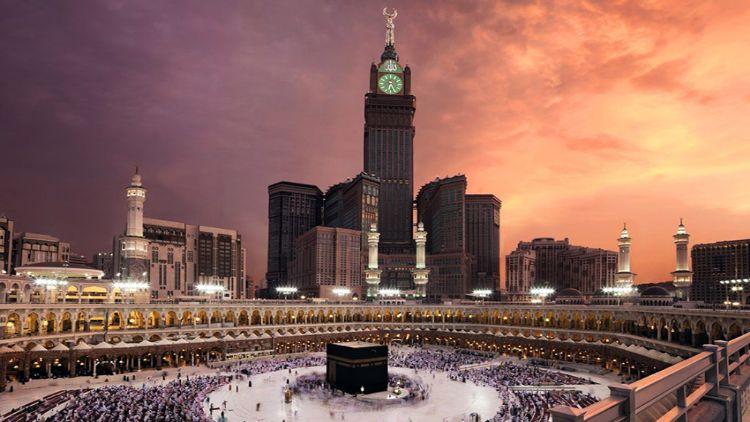
For many pilgrims, the first sight of the Ka’bah becomes one of the most memorable moments of their lives.
After travelling from distant countries and hearing about the Sacred House throughout their lives, believers finally stand before the Qiblah of the Muslim world.
Some pilgrims have waited years. Others have saved for decades. Many arrive carrying hopes, prayers and dreams that they have brought from every corner of the world.
As the Ka’bah comes into view, hearts often fill with gratitude, humility and awe. Some pilgrims become emotional and shed tears, while others stand silently reflecting upon the blessing Allah has granted them.
The Ka’bah is not worshipped. Rather, it is the direction towards which Muslims turn during prayer. It symbolises the unity of the Ummah and the worship of One Allah.
🌟 Did You Know?
More than a billion Muslims around the world face the Ka’bah every day when they perform their prayers.
📖 Reflection
When you first see the Ka’bah, pause for a moment. Thank Allah for bringing you safely to His Sacred House and ask Him to accept your journey.
The Ka’bah
The Ka’bah is the most sacred building in Islam.
Allah mentions in the Qur’an that the first House established for the worship of Allah was in Makkah.
Arabic
إِنَّ أَوَّلَ بَيْتٍ وُضِعَ لِلنَّاسِ لَلَّذِي بِبَكَّةَ مُبَارَكًا وَهُدًى لِّلْعَالَمِينَ
Translation
“Indeed, the first House established for mankind was that at Bakkah, blessed and a guidance for the worlds.”
(Surah Aal-Imran 3:96)
The Ka’bah was rebuilt by Prophet Ibrahim عليه السلام and his son Ismail عليه السلام, who raised its foundations in obedience to Allah.
For centuries Muslims from every corner of the world have faced the Ka’bah during their prayers.
👣 Walking in Their Footsteps
Imagine Prophet Ibrahim عليه السلام and Prophet Ismail عليه السلام carefully placing each stone while building the House of Allah. The same House remains the centre of Muslim worship today.
🌟 Did You Know?
The Ka’bah has been repaired and renovated several times throughout history, but its spiritual significance has remained unchanged.
📖 Reflection
The Ka’bah reminds believers that true honour comes through obedience to Allah and following His guidance.
The Ka’bah Today
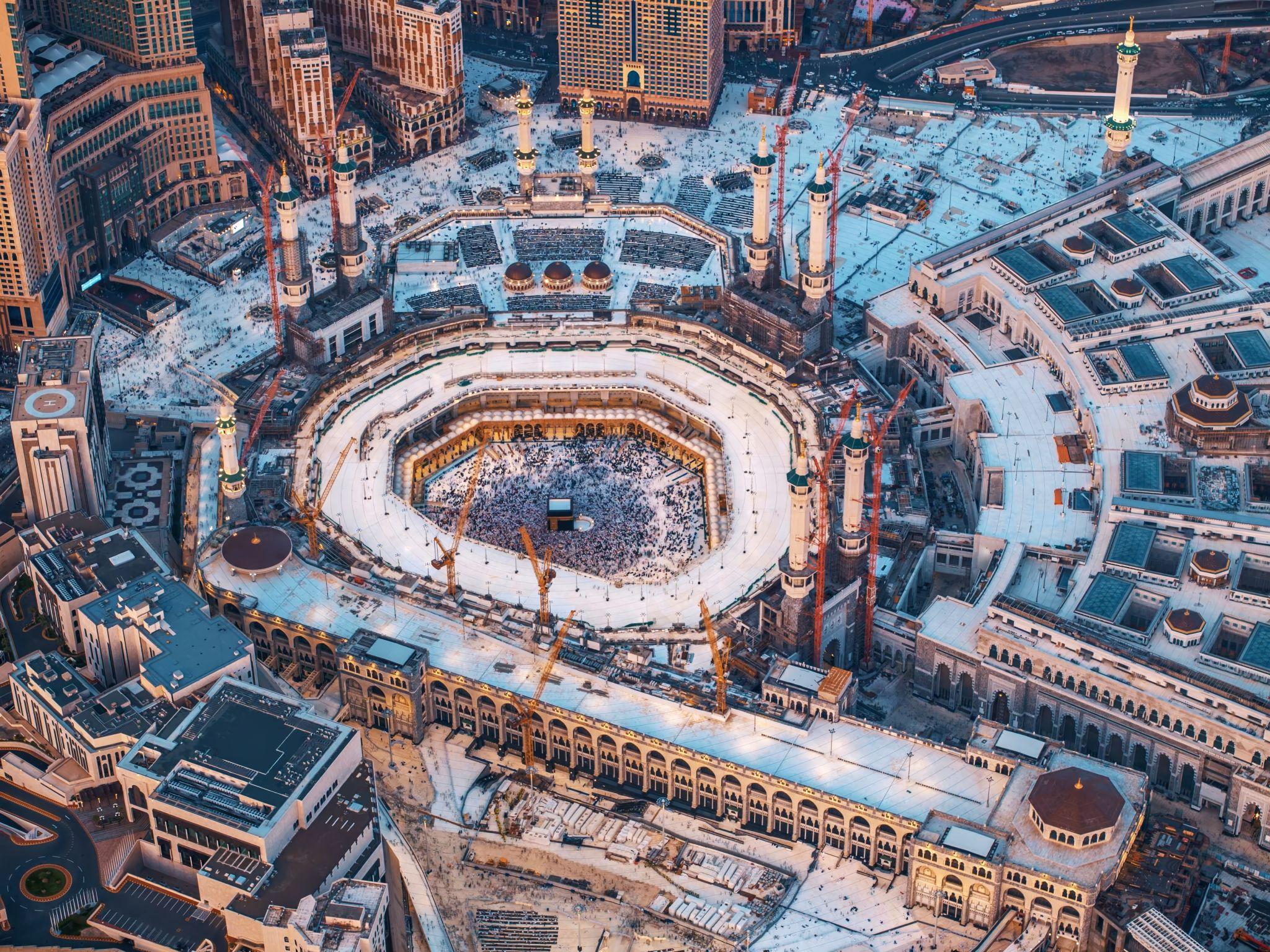
The Ka’bah stands at the centre of Masjid al-Haram, the largest mosque in the world.
Millions of Muslims visit the Sacred House every year to perform Umrah and Hajj.
Although the surrounding city has changed dramatically over the centuries, the Ka’bah remains the spiritual heart of Islam.
The black cloth covering the Ka’bah is known as the Kiswah. It is embroidered with beautiful Qur’anic verses and is replaced annually.
🕌 Remember
The beauty of the Ka’bah is not found in its size or appearance. Its honour comes from the fact that Allah chose it as His Sacred House.
🌟 Did You Know?
The Kiswah is made from high-quality silk and decorated with gold and silver embroidery containing verses from the Qur’an.
📖 Reflection
No matter where Muslims live in the world, they all face this same House in prayer. The Ka’bah is a powerful symbol of unity and faith.
Haram Orientation
Before beginning Tawaf, it is helpful to become familiar with the important locations around the Ka’bah.
The orientation map identifies many of the important places a pilgrim will encounter during Umrah.
These include:
- Ka’bah
- Hajar al-Aswad
- Maqam Ibrahim
- Zamzam Area
- Safa
- Marwah
- Hateem
- Multazam
- Mizab al-Rahmah
Understanding these locations helps pilgrims move confidently around Masjid al-Haram and appreciate the rich history surrounding the Sacred House.
Important Places Around the Ka’bah
Hateem (Hijr Ismail)
The semi-circular area beside the Ka’bah that forms part of its original foundations.
Multazam
The area between the door of the Ka’bah and Hajar al-Aswad where many pilgrims make heartfelt du’a.
Mizab al-Rahmah
The golden spout on the roof of the Ka’bah through which rainwater flows into the Hateem.
🌟 Did You Know?
Many pilgrims pass important historical locations around the Ka’bah without realising their significance. Learning about them beforehand makes the experience much more meaningful.
📖 Reflection
Learning about the Haram before performing Umrah allows the pilgrim to focus more on worship and less on uncertainty.
🕌 Remember
These locations are important because of their connection to Islamic history. The focus of every act of worship remains Allah alone.
Tawaf
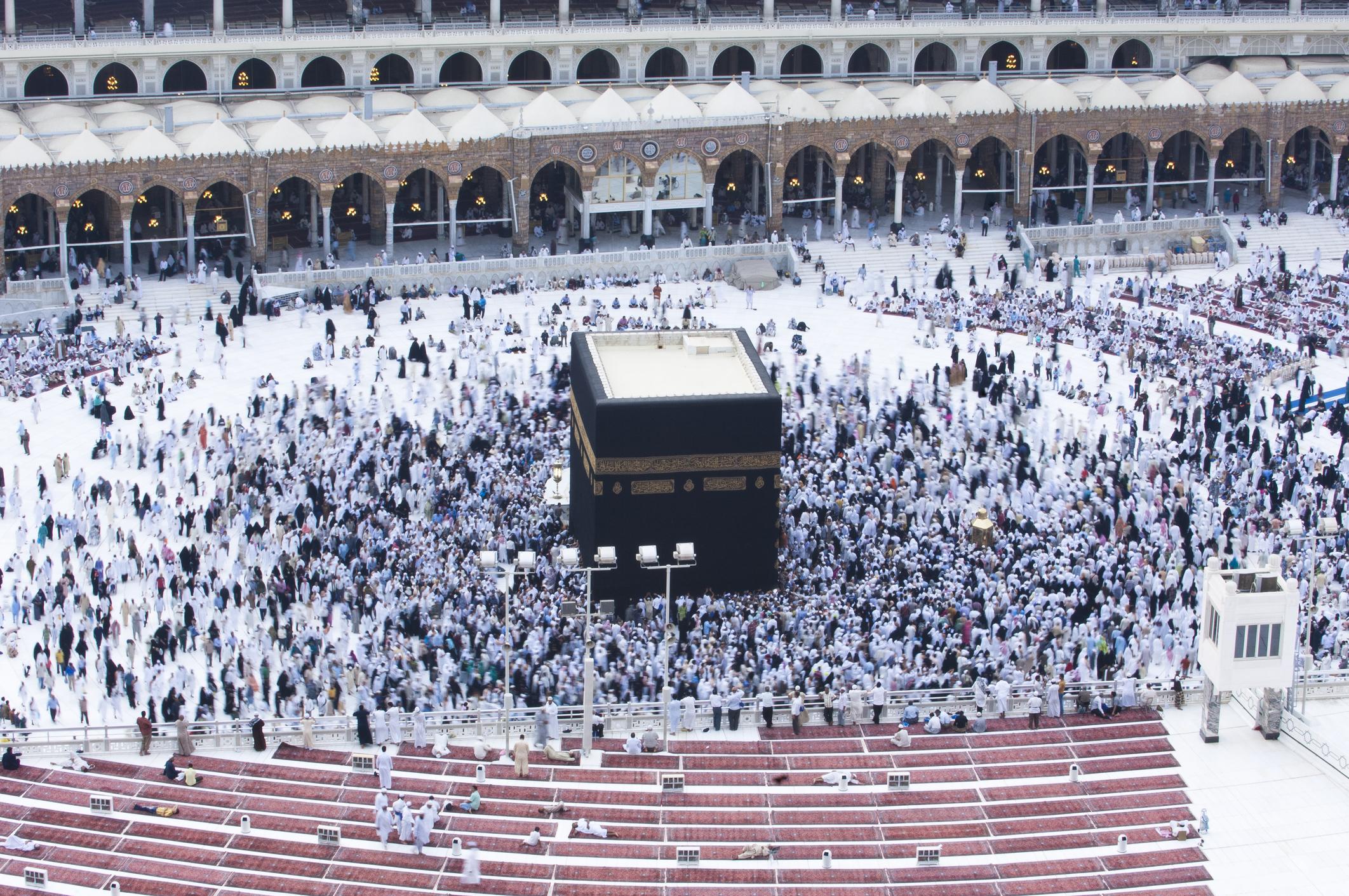
Beginning Tawaf
After entering Masjid al-Haram and seeing the Ka’bah, the pilgrim begins Tawaf.
Tawaf is the act of walking around the Ka’bah seven times in an anti-clockwise direction.
The pilgrim begins each lap from the corner containing Hajar al-Aswad and continues until seven complete laps have been completed.
During Tawaf, pilgrims engage in:
- Dhikr (Remembrance of Allah)
- Du’a (Supplication)
- Recitation of the Qur’an
- Reflection and gratitude
There are no specific compulsory du’as for each lap. Pilgrims may supplicate in any language and ask Allah for whatever is beneficial.
🌟 Did You Know?
Millions of Muslims perform Tawaf every year, yet each pilgrim experiences a unique spiritual journey.
🕌 Remember
The purpose of Tawaf is not to rush. Walk calmly, avoid pushing others and focus upon remembering Allah.
Hadith
“Tawaf around the House is like prayer, except that you may speak during it.”
📖 Reflection
As you walk around the Ka’bah, remember that believers from every nation, language and background are united in worshipping one Allah.
Hajar al-Aswad (The Black Stone)
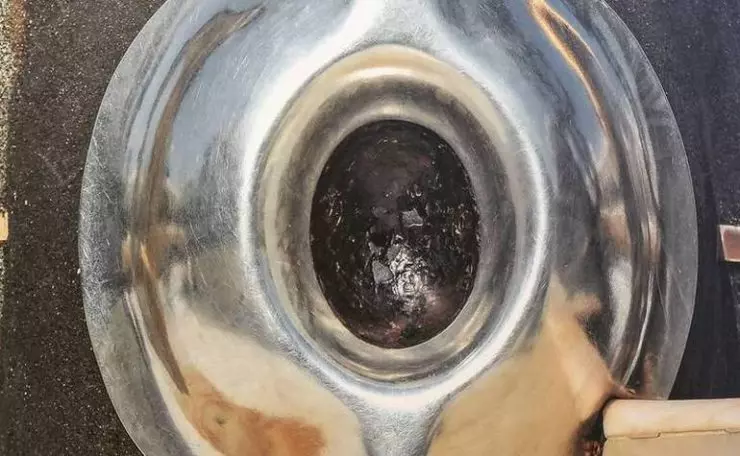
Hajar al-Aswad, commonly known as the Black Stone, is set into the eastern corner of the Ka’bah and marks the starting point of Tawaf.
At the beginning of each lap, pilgrims face the Black Stone and, if possible, kiss it or touch it. Due to large crowds, most pilgrims simply raise their right hand towards it and say:
Arabic
بِسْمِ اللهِ، اللهُ أَكْبَر
Translation
“In the Name of Allah, Allah is the Greatest.”
The Black Stone is not worshipped. Muslims honour it because Rasulullah ﷺ honoured it.
🌟 Did You Know?
According to authentic narrations, the Black Stone came from Paradise and was originally whiter than milk before becoming darkened over time.
🕌 Remember
Never push, shove or harm others in an attempt to reach Hajar al-Aswad. Respect for fellow pilgrims is more important than reaching the Stone itself.
📖 Reflection
Acts of worship are based upon obedience to Allah and following the example of His Messenger ﷺ.
Maqam Ibrahim
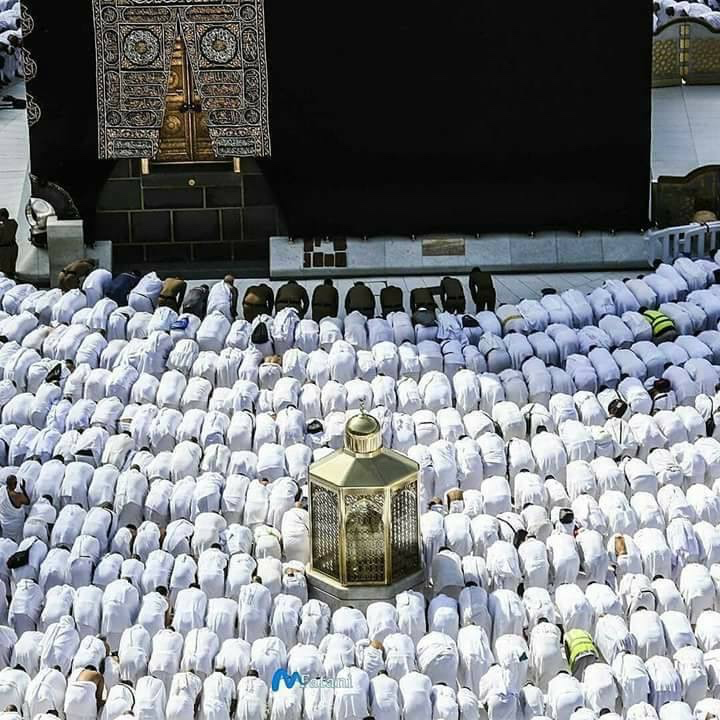
After completing Tawaf, pilgrims perform two rak’ahs of prayer, preferably behind Maqam Ibrahim if space permits.
Maqam Ibrahim contains the stone upon which Prophet Ibrahim عليه السلام stood while raising the walls of the Ka’bah.
Qur’anic Verse
وَاتَّخِذُوا مِن مَّقَامِ إِبْرَاهِيمَ مُصَلًّى
Translation
“And take the Station of Ibrahim as a place of prayer.”
(Surah Al-Baqarah 2:125)
The preserved footprints remind pilgrims of the dedication and sacrifice of Ibrahim عليه السلام in establishing the Sacred House.
👣 Walking in Their Footsteps
Imagine Prophet Ibrahim عليه السلام standing upon this stone while building the House of Allah that would become the Qiblah for billions of Muslims.
📖 Reflection
Great achievements often begin with sincere obedience to Allah, even when the task seems difficult.
Zamzam
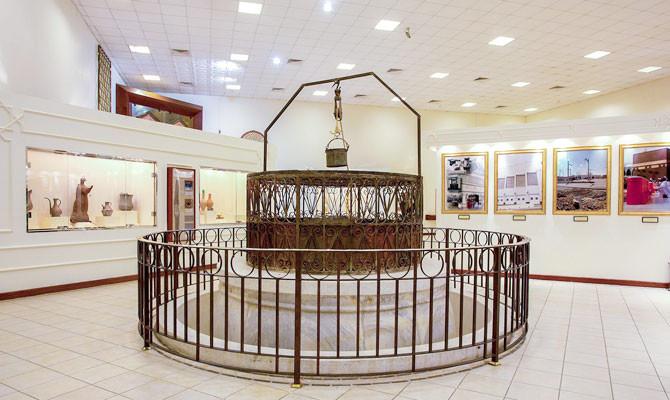
The story of Zamzam
The Well of Zamzam is one of the greatest blessings associated with Makkah.
Its story begins with Sayyidah Hajar عليها السلام and her infant son Ismail عليه السلام.
Left in the barren valley of Makkah, Hajar searched desperately for water, running between Safa and Marwah.
When all hope seemed lost, Allah caused water to spring forth near Ismail عليه السلام.
That blessed water continues to benefit pilgrims today.
Hadith
“The water of Zamzam is for whatever it is drunk for.”
🌟 Did You Know?
Millions of pilgrims drink Zamzam every year, yet the well continues to provide water for visitors from around the world.
🕌 Remember
When drinking Zamzam, stand if possible, face the Qiblah and make sincere du’a to Allah.
📖 Reflection
The story of Zamzam teaches believers that Allah can provide relief and blessings from places they never expect.
Safa and Marwah
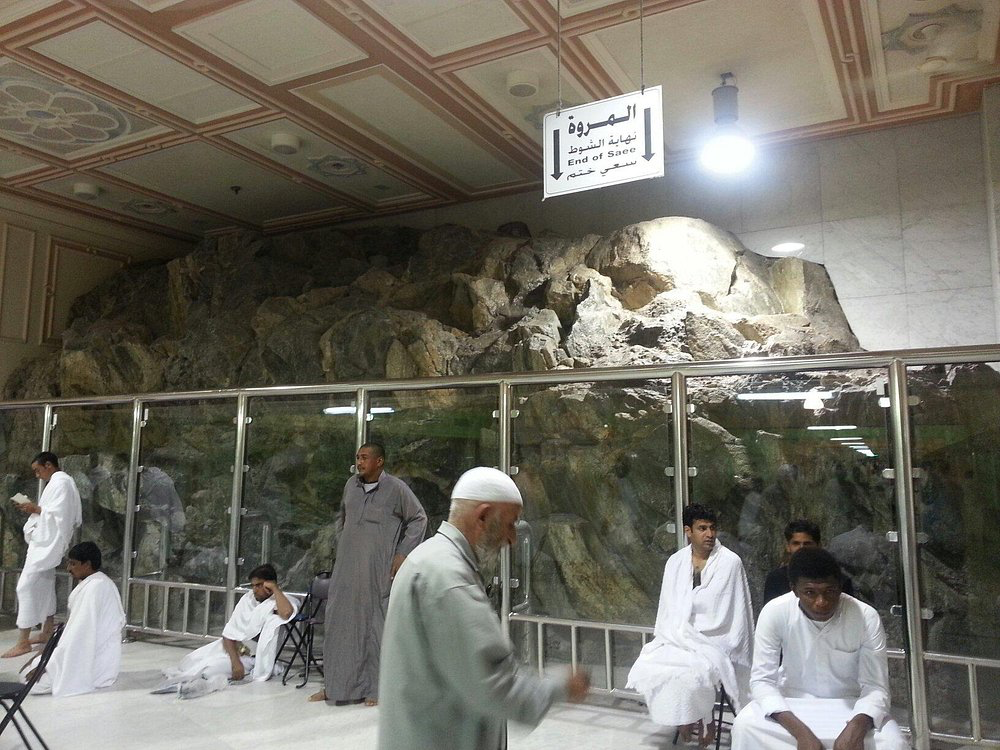
After drinking Zamzam, the pilgrim proceeds towards Safa to begin Sa’i.
Safa and Marwah are two small hills located within Masjid al-Haram. Allah mentions them directly in the Qur’an:
Arabic
إِنَّ الصَّفَا وَالْمَرْوَةَ مِن شَعَائِرِ اللَّهِ
Translation
“Indeed, Safa and Marwah are among the symbols of Allah.”
(Surah Al-Baqarah 2:158)
The ritual of Sa’i commemorates the remarkable story of Sayyidah Hajar عليها السلام.
🌟 Did You Know?
Every pilgrim performing Umrah retraces the footsteps of Hajar عليها السلام, honouring her trust in Allah and determination as a mother.
👣 Walking in Their Footsteps
Imagine the courage of Hajar عليها السلام. Alone in the desert, she never gave up hope in Allah’s mercy.
📖 Reflection
The story of Hajar teaches us that believers should always strive, make effort and place their trust in Allah.
Sa’i Between Safa and Marwah
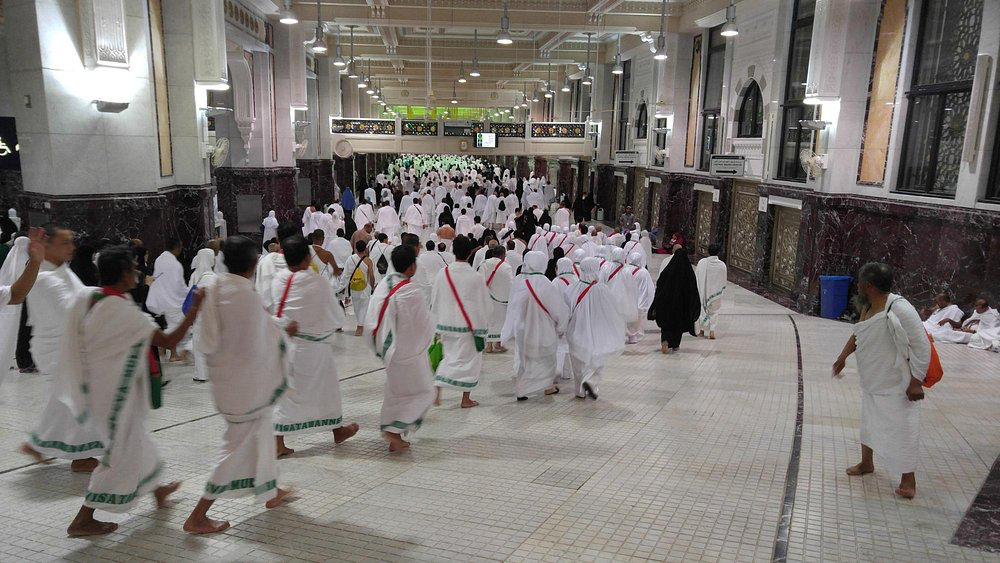
Walking the seven lengths
Sa’i consists of walking seven times between Safa and Marwah.
The pilgrim begins at Safa and ends at Marwah.
Men are encouraged to walk briskly between the two green markers, commemorating the urgency of Hajar’s search for water. Women continue at a normal pace.
Today the Sa’i area is enclosed within Masjid al-Haram and comfortably accommodates millions of pilgrims every year.
🕌 Remember
Sa’i is not a race. Walk calmly, remember Allah and reflect upon the lessons of patience and trust.
🌟 Did You Know?
The Sa’i corridor now extends across multiple levels, allowing pilgrims to perform Sa’i more comfortably during busy periods.
📖 Reflection
The journey between Safa and Marwah reminds believers that success often comes after perseverance.
Completing Umrah
After completing the seventh lap at Marwah, the pilgrim performs the final act of Umrah.
For men, this involves either:
- Shaving the head completely (Halq)
- Trimming the hair (Taqsir)
Women trim a small portion from the ends of their hair.
After this step, the restrictions of Ihram come to an end and the Umrah is complete.
🌟 Did You Know?
The Prophet ﷺ made du’a three times for those who shaved their heads and once for those who shortened their hair.
📖 Reflection
Completing Umrah should not be viewed as the end of the journey. Rather, it is the beginning of a renewed commitment to worship and obedience to Allah.
Common Mistakes During Umrah
Pushing and Crowding
The sanctity of fellow Muslims must always be respected.
Excessive Focus on Photography
Do not allow phones and cameras to distract you from worship.
Believing Certain Du’as Are Mandatory
There are no compulsory du’as for each lap of Tawaf or Sa’i.
Causing Harm to Reach Hajar al-Aswad
Respect for fellow pilgrims takes priority.
Rushing Through the Rituals
The purpose of Umrah is worship, reflection and remembrance of Allah.
🕌 Remember
Good character is one of the greatest acts of worship during Umrah.
Essential Du’as for the Journey
Entering the Haram
Ask Allah for acceptance, forgiveness and sincerity.
During Tawaf
Make personal du’as from the heart.
At Multazam
Ask Allah for your most important needs.
While Drinking Zamzam
Ask Allah for beneficial knowledge, provision and acceptance.
During Sa’i
Reflect upon the trust and perseverance of Hajar عليها السلام.
For Family and Friends
Remember parents, spouses, children, relatives and the wider Ummah in your du’as.
📖 Reflection
One of the greatest blessings of Umrah is the opportunity to speak directly to Allah in one of the most sacred places on earth.
Chapter Reflection
Umrah is more than a sequence of rituals.
Every step carries a lesson.
Ihram teaches humility.
Tawaf teaches unity.
Zamzam teaches trust in Allah.
Sa’i teaches perseverance.
The completion of Umrah teaches gratitude.
The journey may last only a few hours, but its lessons can remain with a believer for a lifetime.
Arabic
رَبَّنَا تَقَبَّلْ مِنَّا ۖ إِنَّكَ أَنتَ السَّمِيعُ الْعَلِيمُ
Translation
“Our Lord, accept from us. Indeed, You are the All-Hearing, the All-Knowing.”
(Surah Al-Baqarah 2:127)
May Allah accept the Umrah of every pilgrim and allow the lessons of this blessed journey to remain alive in their hearts.
Ameen.
Makkah & Masjid al-Haram
The Sacred City of Makkah
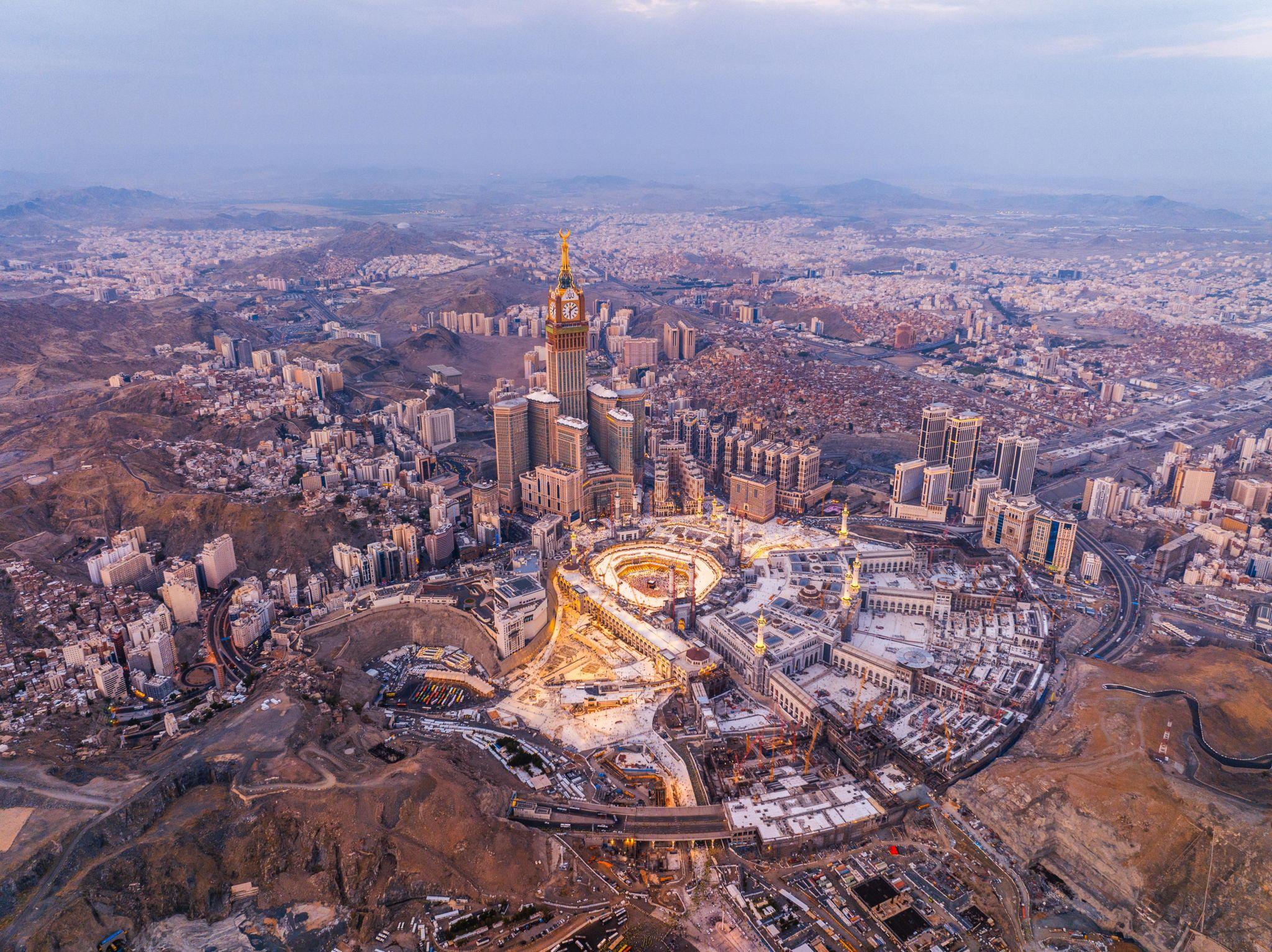
Makkah is the holiest city in Islam and the birthplace of Rasulullah ﷺ.
For thousands of years it has been a place of worship, pilgrimage and devotion to Allah. Every day, millions of Muslims around the world turn towards Makkah when they perform their prayers.
Allah honoured this city above all others by choosing it as the location of the Ka’bah, the first House established for the worship of Allah.
Arabic
إِنَّ أَوَّلَ بَيْتٍ وُضِعَ لِلنَّاسِ لَلَّذِي بِبَكَّةَ مُبَارَكًا وَهُدًى لِّلْعَالَمِينَ
Translation
“Indeed, the first House established for mankind was that at Bakkah, blessed and a guidance for the worlds.”
(Surah Aal-Imran 3:96)
Today Muslims from every nation continue to answer the call of Allah by travelling to this blessed city for Umrah and Hajj.
🌟 Did You Know?
The name “Bakkah” mentioned in the Qur’an is one of the ancient names of Makkah.
📖 Reflection
Makkah reminds believers that true honour is found in obedience to Allah rather than wealth, status or power.
Masjid al-Haram
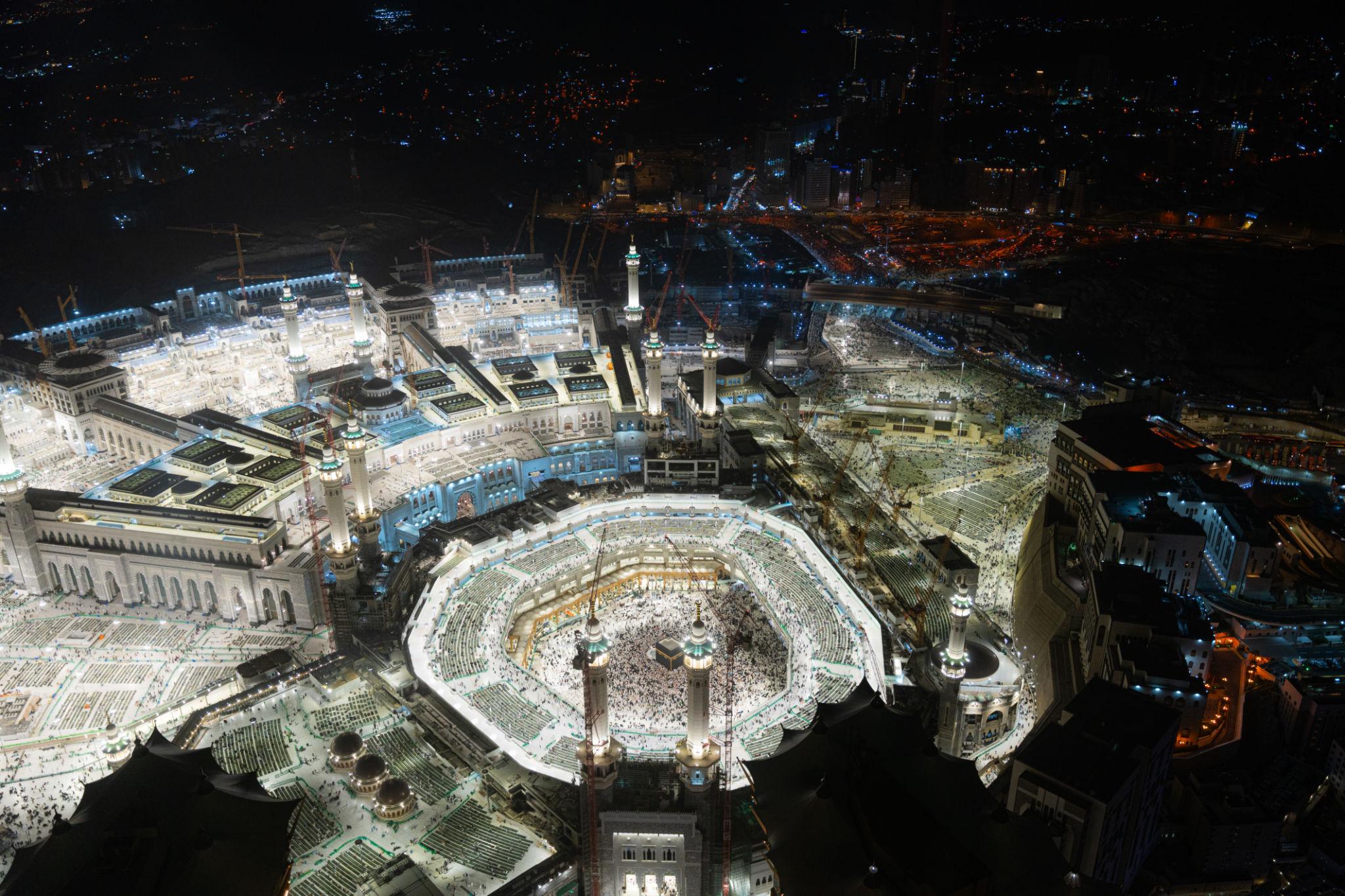
Masjid al-Haram is the largest and most visited mosque in the world.
At its centre stands the Ka’bah, the Qiblah towards which Muslims direct their prayers.
Over the centuries, Masjid al-Haram has undergone many expansions to accommodate the growing number of pilgrims. What began as a relatively small area surrounding the Ka’bah has become a vast complex capable of accommodating millions of worshippers.
Despite these changes, the purpose of the Haram remains unchanged: the worship of Allah.
Arabic
وَطَهِّرْ بَيْتِيَ لِلطَّائِفِينَ وَالْقَائِمِينَ وَالرُّكَّعِ السُّجُودِ
Translation
“And purify My House for those who perform Tawaf and those who stand, bow and prostrate.”
(Surah Al-Hajj 22:26)
🌟 Did You Know?
One prayer in Masjid al-Haram carries a reward far greater than a prayer performed elsewhere.
🕌 Remember
The greatest blessing of Masjid al-Haram is not its size or beauty, but the opportunity it gives believers to worship Allah near His Sacred House.
Makkah Through History
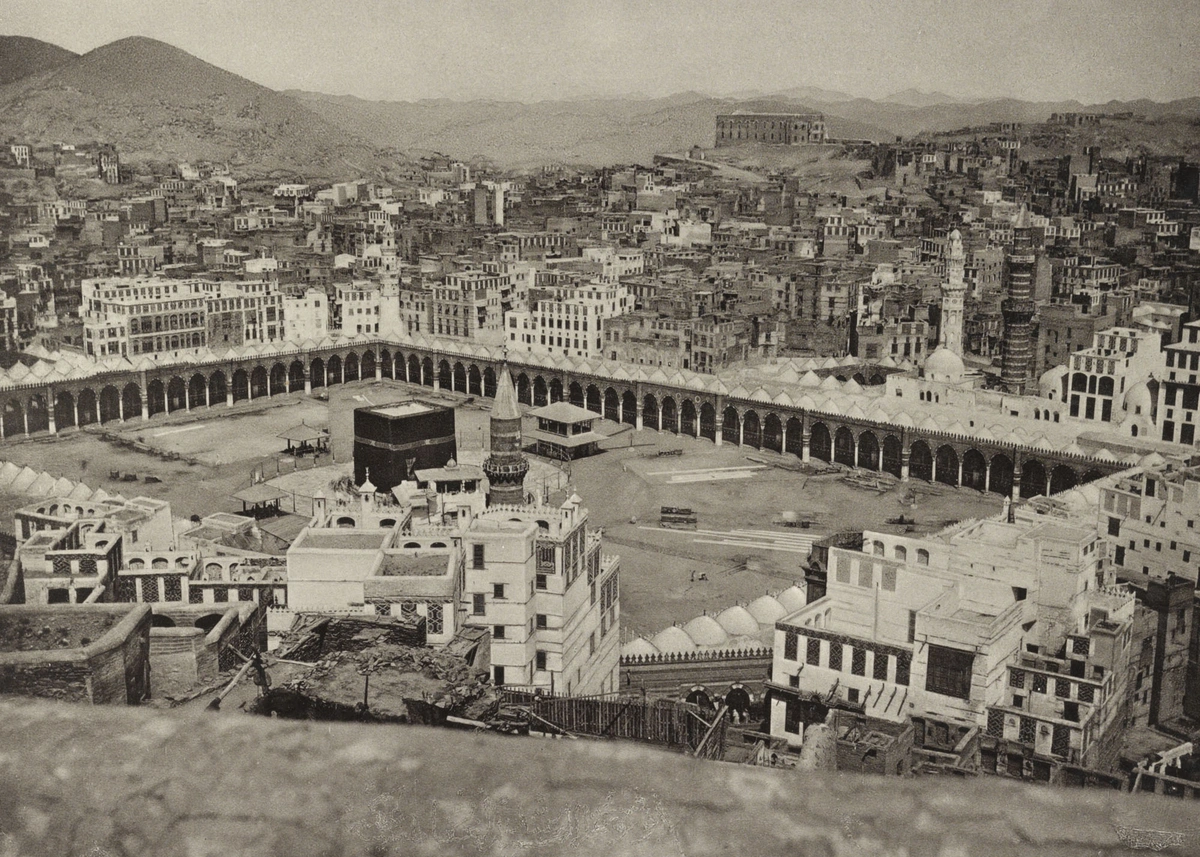
When looking at old photographs of Makkah, many pilgrims are surprised by how much the city has changed.
Only a few decades ago, the area surrounding the Ka’bah consisted mainly of small buildings, narrow streets and modest accommodation. Pilgrims travelled under difficult conditions and often spent weeks or months reaching Makkah.
Today the city contains modern roads, hotels, transport systems and facilities designed to serve millions of visitors.
Yet one thing remains unchanged.
The Ka’bah continues to stand at the centre of the Muslim world, just as it did during the time of Rasulullah ﷺ.
🌟 Did You Know?
Although Makkah has transformed dramatically over the centuries, the direction of prayer for Muslims worldwide has never changed.
📖 Reflection
Buildings, cities and generations may change, but the worship of Allah remains constant.
Around the Ka’bah
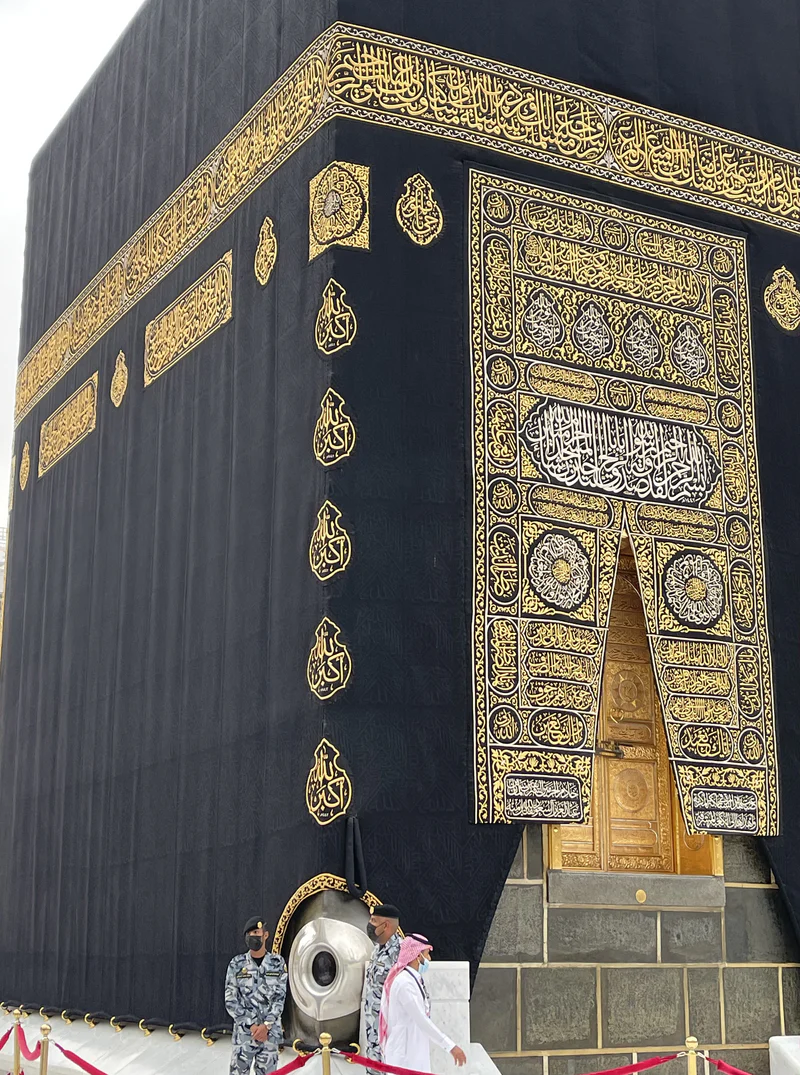
The Ka’bah contains many features that connect pilgrims to the history of Islam.
While Tawaf remains the primary act of worship around the Ka’bah, understanding these features helps pilgrims appreciate the significance of the Sacred House.
Among the most well-known features are:
Hajar al-Aswad
Multazam
Hateem (Hijr Ismail)
Mizab al-Rahmah
The Kiswah
The Door of the Ka’bah
Each of these carries historical importance and helps connect believers with the legacy of Prophet Ibrahim عليه السلام and Rasulullah ﷺ.
👣 Walking in Their Footsteps
Many of the places surrounding the Ka’bah today were known to the Prophet ﷺ and his companions. Standing in these locations reminds pilgrims of the sacrifices made to preserve Islam.
📖 Reflection
Learning about the Sacred House transforms a visit from sightseeing into a deeper spiritual experience.
Hateem (Hijr Ismail)
The Hateem, also known as Hijr Ismail, is the semi-circular area adjacent to the Ka’bah enclosed by a low white wall.
Many pilgrims do not realise that this area was originally part of the Ka’bah itself.
When the Quraysh rebuilt the Ka’bah before the Prophethood of Rasulullah ﷺ, they did not have sufficient lawful funds to complete the structure upon its original foundations. As a result, a portion was left outside the main building and marked by the semi-circular wall seen today.
🌟 Did You Know?
Praying inside the Hateem is equivalent to praying inside the Ka’bah because it forms part of the original foundations built by Prophet Ibrahim عليه السلام.
🕌 Remember
The Hateem should never become a source of pushing or crowding. If it is busy, pray elsewhere in the Haram and maintain good manners.
📖 Reflection
The Hateem reminds us that sincerity is more important than appearance. Although it sits outside the visible walls of the Ka’bah, it remains part of the Sacred House.
Multazam
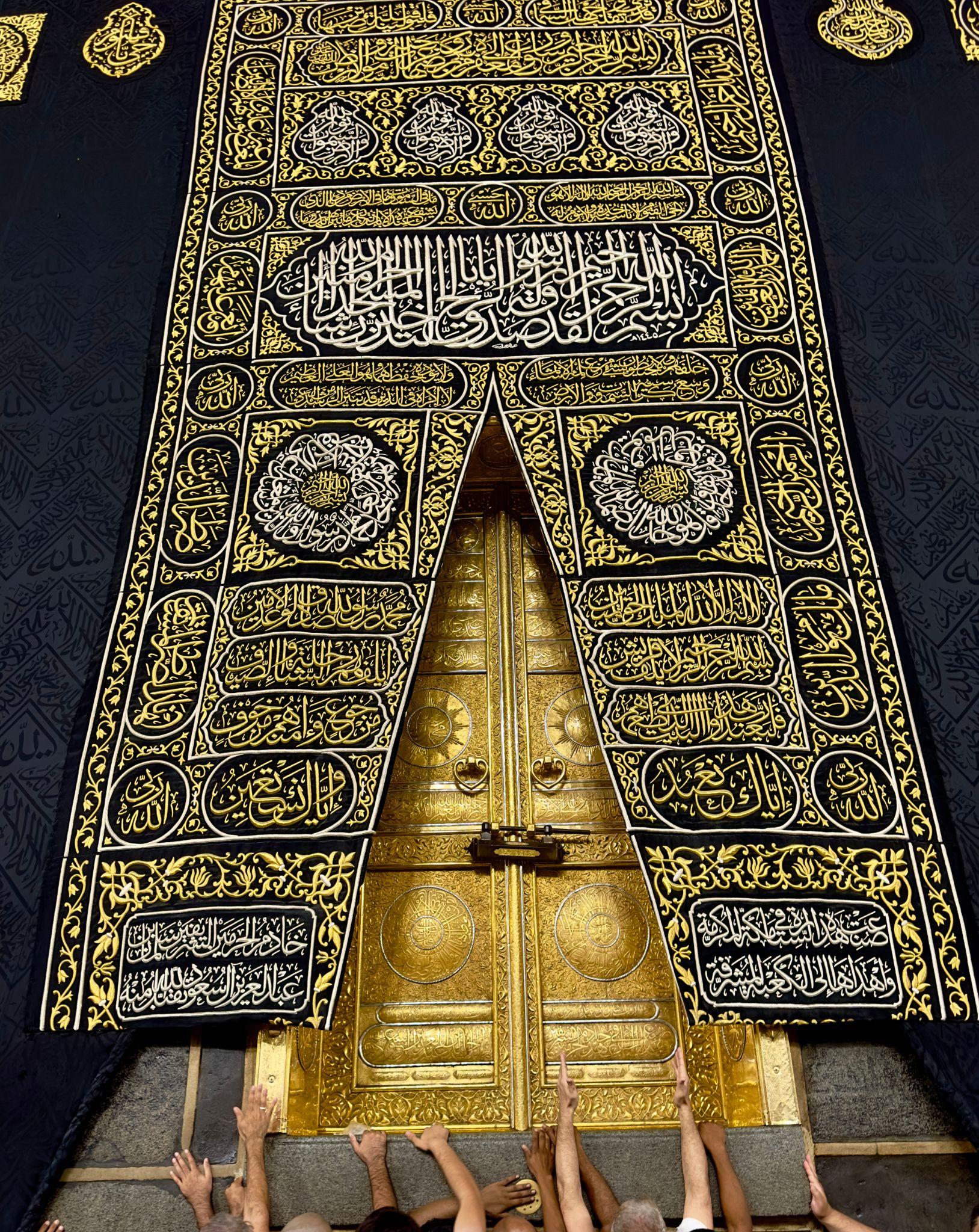
The Multazam is the area between the door of the Ka’bah and Hajar al-Aswad.
Throughout history, many pilgrims have stood at this location making heartfelt du’a to Allah.
It is a place associated with humility, repentance and sincere supplication.
Pilgrims who are able to reach this area without harming others may make du’a there. However, there is no obligation to do so and no act of worship should involve causing difficulty to fellow Muslims.
🌟 Did You Know?
The word “Multazam” comes from a root meaning “to cling” because pilgrims would stand close to this part of the Ka’bah while making du’a.
🕌 Remember
Acceptance of du’a depends upon sincerity and Allah’s mercy, not upon reaching a specific place.
📖 Reflection
The Multazam reminds believers that Allah hears every sincere prayer regardless of where it is made.
Mizab al-Rahmah
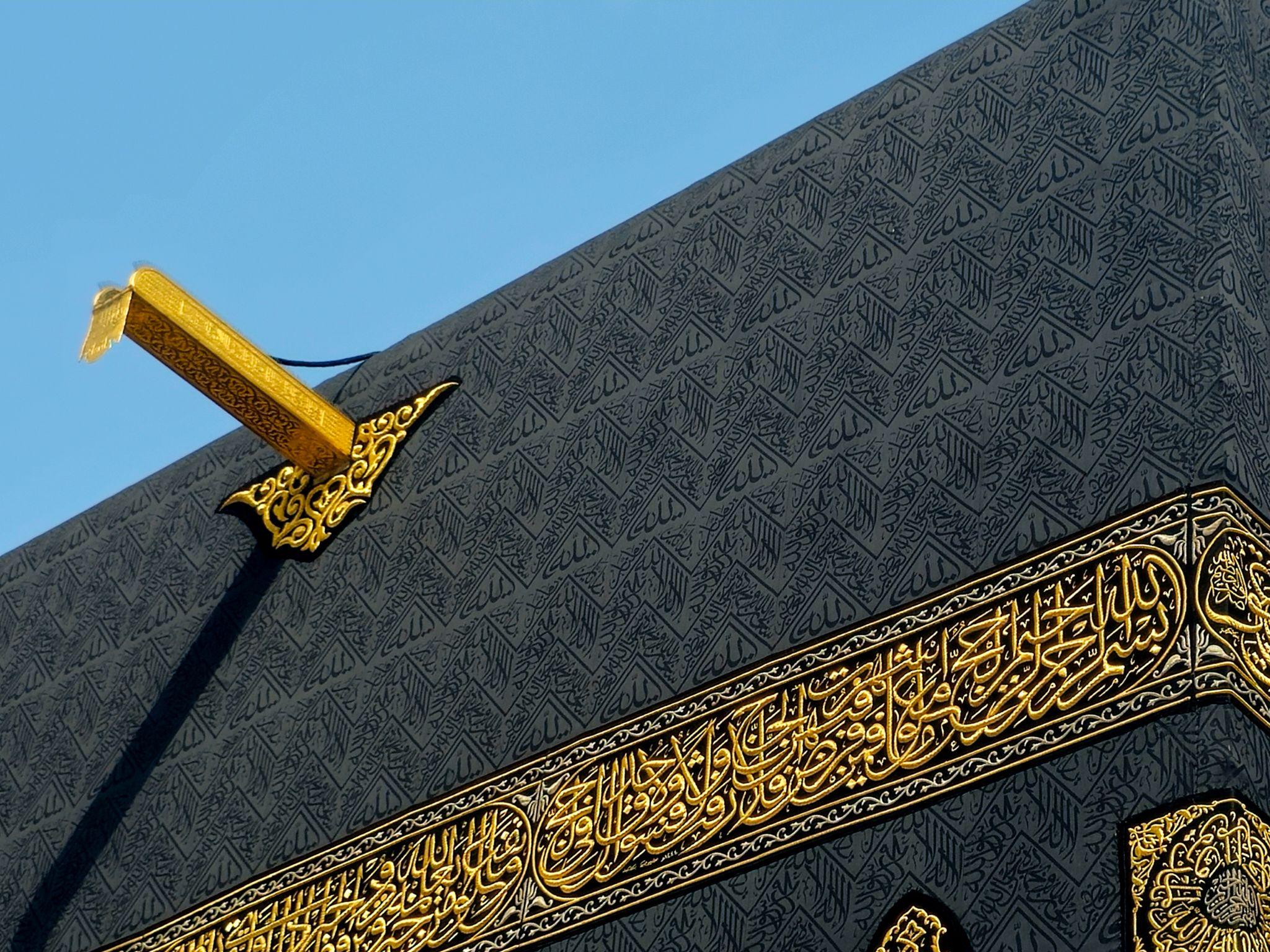
The Mizab al-Rahmah, meaning “The Spout of Mercy,” is the golden water spout located on the roof of the Ka’bah.
Its purpose is practical: to allow rainwater to drain from the roof of the Ka’bah.
The water flows into the Hateem area below.
Although the Mizab is a relatively small feature, it has become one of the most recognisable parts of the Ka’bah.
🌟 Did You Know?
The current Mizab has been replaced several times throughout Islamic history.
👣 Walking in Their Footsteps
For centuries pilgrims have stood in the Haram looking up at the Mizab and reflecting upon the history of the Sacred House.
📖 Reflection
Even the smallest features of the Ka’bah connect believers to generations of Muslims who worshipped Allah before them.
Inside the Ka’bah
Few Muslims ever have the opportunity to enter the Ka’bah.
The interior is simple and dignified, reflecting the purpose of the building as a place dedicated to the worship of Allah.
Inside are supporting pillars, lamps and inscriptions from various periods of Islamic history.
Despite the interest many people have in the interior of the Ka’bah, Islam teaches that the true significance of the Sacred House lies not in its physical features but in its connection to the worship of Allah.
🌟 Did You Know?
The Ka’bah is opened only on special occasions and very few people are granted access inside.
🕌 Remember
The greatest honour is not entering the Ka’bah itself, but being among those whose worship is accepted by Allah.
📖 Reflection
The simplicity of the Ka’bah teaches believers that spiritual value comes from devotion and sincerity rather than decoration and luxury.
The Kiswah
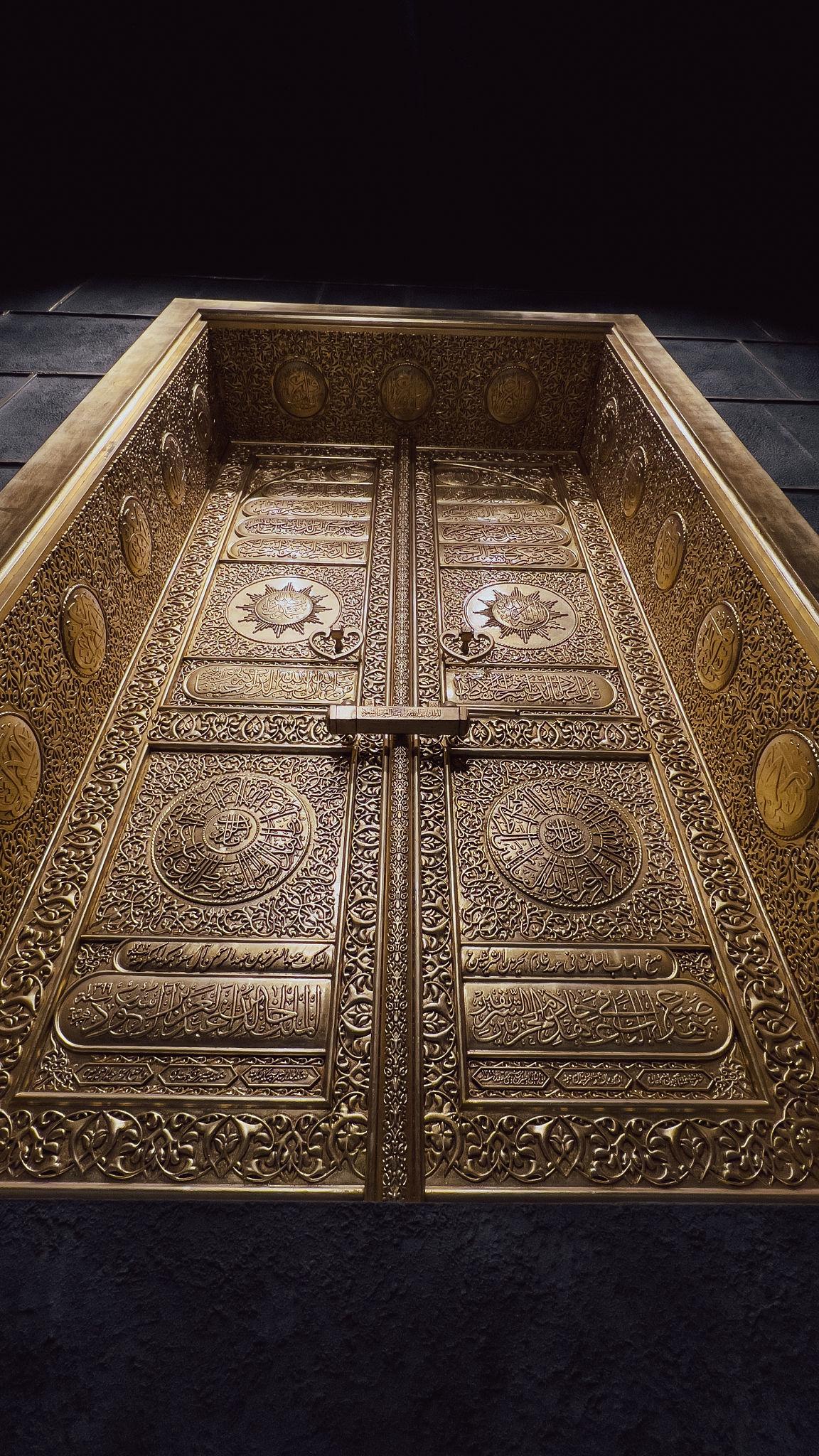
The Kiswah is the black cloth that covers the Ka’bah.
It is embroidered with verses from the Qur’an using gold and silver thread and is replaced periodically as part of the care given to the Sacred House.
The beauty of the Kiswah reflects the honour and respect shown to the Ka’bah throughout the Muslim world.
🌟 Did You Know?
The manufacture of the Kiswah requires highly skilled craftsmanship and uses large quantities of silk and embroidery.
📖 Reflection
The honour of the Ka’bah comes from Allah’s choice, not from the cloth that covers it. The Kiswah is a symbol of respect, while worship belongs to Allah alone.
Visiting Makkah Today
Millions of pilgrims visit Makkah every year.
Modern facilities have made travel easier than at any point in history, yet the spiritual lessons remain unchanged.
The believer still enters the Haram with humility.
The believer still performs Tawaf around the Ka’bah.
The believer still follows the footsteps of Prophet Ibrahim عليه السلام, Sayyidah Hajar عليها السلام and Rasulullah ﷺ.
Technology, transport and buildings may change, but the purpose of pilgrimage remains the same: worshipping Allah and seeking His pleasure.
🌟 Did You Know?
Pilgrims now travel to Makkah from virtually every country in the world, making it one of the most diverse gatherings of people on earth.
📖 Reflection
Makkah teaches believers that Islam unites people beyond language, nationality and culture.
Chapter Reflection
Makkah is more than a city.
It is the heart of the Muslim world.
The Ka’bah reminds us of unity.
The Hateem reminds us of history.
The Multazam reminds us of du’a.
The Mizab reminds us of mercy.
The Kiswah reminds us of honour.
Every feature of the Haram points towards one reality: the worship of Allah alone.
Arabic
وَأَنَّ الْمَسَاجِدَ لِلَّهِ فَلَا تَدْعُوا مَعَ اللَّهِ أَحَدًا
Translation
“And the mosques belong to Allah, so do not call upon anyone besides Allah.”
(Surah Al-Jinn 72:18)
May Allah grant every believer the opportunity to visit His Sacred House, worship Him sincerely and return with a heart strengthened in faith.
Ameen.
Madinah & Masjid Nabawi
The Blessed City of Madinah
After completing their time in Makkah, many pilgrims travel to Madinah, the beloved city of Rasulullah ﷺ.
Unlike Makkah, where the focus is centred upon the Ka’bah and the rites of pilgrimage, Madinah is a city that reminds believers of the life, character and teachings of the Messenger of Allah ﷺ.
For Muslims throughout the world, Madinah is a place of peace, love and reflection.
It was here that Rasulullah ﷺ established the first Muslim community, taught the Qur’an, guided his companions and spent the final years of his blessed life.
Today millions of believers visit Madinah every year to pray in Masjid Nabawi and send salutations upon the Prophet ﷺ.
Hadith
Rasulullah ﷺ said:
“Madinah is better for them if only they knew.”
🌟 Did You Know?
Before the arrival of Rasulullah ﷺ, Madinah was known as Yathrib.
📖 Reflection
Many pilgrims describe feeling a different atmosphere in Madinah—one of calmness, tranquillity and love for the Messenger of Allah ﷺ.
The Hijrah and the Beginning of the Islamic Community
The migration (Hijrah) from Makkah to Madinah marked one of the most important turning points in Islamic history.
For thirteen years Muslims in Makkah endured persecution and hardship.
When Allah granted permission to migrate, Rasulullah ﷺ and his companions left their homes and travelled to Madinah.
The people of Madinah welcomed them with generosity and kindness.
From this city, Islam spread across Arabia and eventually throughout the world.
👣 Walking in Their Footsteps
Every street of Madinah reminds believers of the sacrifices made by the Muhajirun and Ansar.
🌟 Did You Know?
The Islamic calendar begins from the year of the Hijrah rather than the birth of the Prophet ﷺ.
📖 Reflection
The Hijrah teaches believers that sacrifice for the sake of Allah always leads to greater blessings.
Masjid Nabawi
Masjid Nabawi is the second holiest mosque in Islam after Masjid al-Haram.
Originally built by Rasulullah ﷺ shortly after arriving in Madinah, it became the centre of worship, learning and community life.
Over the centuries it has been expanded many times, yet its importance remains unchanged.
Millions of Muslims gather here each year to pray, learn and remember Allah.
Hadith
“A prayer in this mosque of mine is better than one thousand prayers elsewhere, except Masjid al-Haram.”
🌟 Did You Know?
The original Masjid Nabawi was built using simple materials including mud bricks and palm trunks.
🕌 Remember
The true honour of Masjid Nabawi comes from its connection to Rasulullah ﷺ and the worship of Allah.
The Green Dome
The Green Dome is one of the most recognisable landmarks in the Muslim world.
Located within Masjid Nabawi, it marks the area beneath which lies the Blessed Chamber containing the graves of Rasulullah ﷺ, Sayyiduna Abu Bakr رضي الله عنه and Sayyiduna Umar رضي الله عنه.
The dome itself was not present during the lifetime of the Prophet ﷺ and was added centuries later. Over time it became one of the most famous symbols associated with Madinah.
For many pilgrims, seeing the Green Dome for the first time is an emotional moment that fills the heart with gratitude and love for Rasulullah ﷺ.
🌟 Did You Know?
The Green Dome was not always green. Throughout history it has been painted different colours before eventually becoming known as the Green Dome.
📖 Reflection
The importance of the Green Dome comes not from the structure itself but from its connection to the beloved Messenger of Allah ﷺ.
The Rawdah
The Rawdah is one of the most blessed areas within Masjid Nabawi.
It lies between the house of Rasulullah ﷺ and his pulpit (Minbar).
Hadith
Rasulullah ﷺ said:
“Between my house and my pulpit is a garden from the gardens of Paradise.”
For this reason, Muslims from around the world hope to pray within the Rawdah whenever possible.
Today access is carefully organised to accommodate the large number of visitors wishing to enter.
🕌 Remember
Praying in the Rawdah is a great blessing, but it should never involve pushing, crowding or causing harm to other Muslims.
🌟 Did You Know?
The Rawdah was once part of the original mosque built by Rasulullah ﷺ and his companions.
📖 Reflection
The Rawdah reminds believers that the greatest treasures are not material possessions but opportunities to worship Allah.
Sending Salutations Upon Rasulullah ﷺ
One of the most important reasons pilgrims visit Madinah is to send salutations upon Rasulullah ﷺ.
Allah says in the Qur’an:
Arabic
إِنَّ اللَّهَ وَمَلَائِكَتَهُ يُصَلُّونَ عَلَى النَّبِيِّ ۚ يَا أَيُّهَا الَّذِينَ آمَنُوا صَلُّوا عَلَيْهِ وَسَلِّمُوا تَسْلِيمًا
Translation
“Indeed Allah and His angels send blessings upon the Prophet. O believers, send blessings and peace upon him.”
(Surah Al-Ahzab 33:56)
When visiting Masjid Nabawi, pilgrims should send abundant Salawat upon Rasulullah ﷺ with sincerity, love and respect.
Common Salutation
اللَّهُمَّ صَلِّ عَلَى مُحَمَّدٍ وَعَلَى آلِ مُحَمَّدٍ
“O Allah, send blessings upon Muhammad and the family of Muhammad.”
📖 Reflection
Love for Rasulullah ﷺ is among the greatest treasures a believer can possess.
Visiting the Blessed Chamber
The Blessed Chamber is the area where Rasulullah ﷺ is buried.
Also buried there are his two closest companions:
Sayyiduna Abu Bakr رضي الله عنه
Sayyiduna Umar رضي الله عنه
When visiting this area, pilgrims should maintain dignity, humility and respect.
The purpose of the visit is to send salutations and remember the sacrifices made by Rasulullah ﷺ and his companions.
🕌 Important Reminder
Muslims worship Allah alone.
The visit to the Blessed Chamber is an act of respect and love for Rasulullah ﷺ, not an act of worship directed towards anyone other than Allah.
👣 Walking in Their Footsteps
Standing near the Blessed Chamber reminds believers of the immense sacrifices made to convey Islam to future generations.
📖 Reflection
Every blessing we enjoy as Muslims today reaches us through the efforts of Rasulullah ﷺ and his companions.
Important Etiquettes in Madinah
Madinah is not an ordinary city.
It is the city chosen by Allah to host His beloved Messenger ﷺ.
For this reason, Muslims should strive to display excellent manners while visiting.
Important Etiquettes
Speak respectfully.
Avoid arguments and disputes.
Maintain cleanliness.
Lower the voice inside Masjid Nabawi.
Show kindness to fellow pilgrims.
Increase Salawat upon Rasulullah ﷺ.
Spend time in worship and reflection.
🌟 Did You Know?
Many scholars recommended increasing acts of worship in Madinah because of its unique spiritual atmosphere.
📖 Reflection
The greatest way to honour Madinah is by following the Sunnah of Rasulullah ﷺ.
Living the Sunnah in Madinah
The visit to Madinah should inspire believers to strengthen their connection with the Sunnah.
The city reminds Muslims of:
Mercy
Patience
Generosity
Humility
Good character
These qualities were embodied perfectly by Rasulullah ﷺ.
A successful visit to Madinah is not measured only by the places visited but by the positive changes that remain afterwards.
🌟 Did You Know?
Many companions of Rasulullah ﷺ spent their lives learning directly from him in Madinah.
📖 Reflection
The true gift of Madinah is not merely seeing its landmarks but carrying the Sunnah back into daily life.
Chapter Reflection
Madinah is a city that touches the heart.
Makkah reminds believers of worship.
Madinah reminds believers of the one who taught humanity how to worship.
The Green Dome reminds us of love.
The Rawdah reminds us of Paradise.
The Blessed Chamber reminds us of sacrifice.
The streets of Madinah remind us of the companions who carried Islam to the world.
Arabic
اللَّهُمَّ ارْزُقْنَا حُبَّ نَبِيِّكَ مُحَمَّدٍ ﷺ
Translation
“O Allah, grant us love for Your Prophet Muhammad ﷺ.”
May Allah allow every believer to visit Madinah, pray in Masjid Nabawi and return home with increased love for Rasulullah ﷺ and a stronger commitment to follow his Sunnah.
Ameen.
Important Ziyarat Places
Introduction to Ziyarat
After completing Umrah, many pilgrims visit historical sites connected to the life of Rasulullah ﷺ and the early history of Islam.
These visits are known as Ziyarat.
The purpose of Ziyarat is not to seek blessings from places or objects. Rather, it is to remember important events from Islamic history and reflect upon the sacrifices made by Rasulullah ﷺ, his family and his companions.
These places help bring the Seerah to life and strengthen a believer’s connection with the history of Islam.
📖 Reflection
Every mountain, valley and path around Makkah witnessed events that changed the course of history.
Jannat al-Mu’alla
Jannat al-Mu’alla is the oldest and most famous cemetery in Makkah.
Many members of the family of Rasulullah ﷺ are buried here, including his beloved wife Sayyidah Khadijah رضي الله عنها.
Khadijah رضي الله عنها was the first person to accept Islam and remained a source of support for Rasulullah ﷺ throughout the difficult early years of Prophethood.
Many scholars, relatives and early Muslims are also buried in this cemetery.
👣 Walking in Their Footsteps
Standing near Jannat al-Mu’alla reminds believers of the sacrifices made by those who supported Islam from its very beginning.
🌟 Did You Know?
For many years Rasulullah ﷺ would visit graves and make dua for those buried there.
📖 Reflection
The lives of the righteous may end, but their good deeds continue to benefit future generations.
Jabal al-Nur
Jabal al-Nur means “Mountain of Light.”
It is one of the most famous mountains in Islamic history because it contains Cave Hira, where the first revelation of the Qur’an was received.
Before Prophethood, Rasulullah ﷺ would often retreat to this mountain for worship and contemplation.
🌟 Did You Know?
Jabal al-Nur rises approximately 640 metres above sea level.
📖 Reflection
The mountain reminds believers of the importance of reflection, contemplation and seeking closeness to Allah.
Cave Hira
Cave Hira is one of the most significant locations in Islamic history.
It was here, during the month of Ramadan, that Angel Jibreel عليه السلام first appeared to Rasulullah ﷺ.
The first verses of the Qur’an were revealed:
Arabic
اقْرَأْ بِاسْمِ رَبِّكَ الَّذِي خَلَقَ
Translation
“Read in the Name of your Lord Who created.”
(Surah Al-Alaq 96:1)
This moment marked the beginning of the final revelation sent to humanity.
👣 Walking in Their Footsteps
When pilgrims see Cave Hira, they remember the beginning of the Prophetic mission that transformed the world.
📖 Reflection
A single moment inside a small cave changed the course of human history forever.
Jabal Thawr
Jabal Thawr is closely connected to the Hijrah from Makkah to Madinah.
During the migration, Rasulullah ﷺ and Sayyiduna Abu Bakr رضي الله عنه sought refuge in a cave located on this mountain.
Arabic
لَا تَحْزَنْ إِنَّ اللَّهَ مَعَنَا
Translation
“Do not grieve; indeed Allah is with us.”
(Surah At-Tawbah 9:40)
📖 Reflection
True reliance upon Allah brings strength even during the most difficult moments.
Cave Thawr
The Cave of Thawr is remembered as a place of protection and trust in Allah.
Rasulullah ﷺ and Abu Bakr رضي الله عنه remained here for three nights before continuing their journey to Madinah.
🌟 Did You Know?
This event became one of the greatest examples of Tawakkul in Islamic history.
📖 Reflection
When all worldly means appear limited, Allah’s help can arrive from places beyond imagination.
Mina
Mina is a valley located east of Makkah where pilgrims spend several days during Hajj.
Today it contains one of the largest tent cities in the world.
👣 Walking in Their Footsteps
Pilgrims in Mina follow the same route travelled by Rasulullah ﷺ during his Farewell Hajj.
📖 Reflection
Mina teaches simplicity, patience and unity.
Muzdalifah
After sunset on the Day of Arafah, pilgrims travel to Muzdalifah and spend the night under the open sky.
Pilgrims collect pebbles here for the symbolic stoning of the Jamarat.
🌟 Did You Know?
Rasulullah ﷺ spent the night in Muzdalifah during his Farewell Hajj.
📖 Reflection
Muzdalifah reminds believers of humility and dependence upon Allah.
The Plain of Arafah
The Day of Arafah is the most important day of Hajj.
Hadith
“Hajj is Arafah.”
Millions gather here seeking Allah’s forgiveness and mercy.
👣 Walking in Their Footsteps
Every year pilgrims stand where Rasulullah ﷺ stood during his Farewell Hajj.
📖 Reflection
Arafah reminds believers of the Day of Judgement when all humanity will stand before Allah.
Jabal al-Rahmah (Mount of Mercy)
Jabal al-Rahmah is the most recognisable landmark within Arafah.
Many pilgrims visit this area while making dua during the Day of Arafah.
📖 Reflection
The true importance of Arafah lies not in any structure but in sincere repentance and worship.
Jamarat
The Jamarat are the locations where pilgrims perform the symbolic stoning ritual during Hajj.
The act commemorates the steadfastness of Prophet Ibrahim عليه السلام against the whispers of Shaytan.
🌟 Did You Know?
The modern Jamarat complex has been expanded to safely accommodate millions of pilgrims.
📖 Reflection
The greatest battle is against one’s own sins and desires.
Jannatul Baqi
Jannatul Baqi is the historic cemetery of Madinah.
Thousands of companions, family members of Rasulullah ﷺ and righteous Muslims are buried here.
👣 Walking in Their Footsteps
A visit to Baqi reminds believers of the temporary nature of worldly life.
🌟 Did You Know?
Rasulullah ﷺ regularly visited Baqi and made dua for those buried there.
📖 Reflection
The simplicity of Baqi teaches humility and preparation for the Hereafter.
Masjid Quba
Masjid Quba was the first mosque established after the Hijrah.
Hadith
“Whoever purifies himself in his home and then comes to Masjid Quba and prays in it will have a reward like that of Umrah.”
📖 Reflection
Every successful community begins with worship and obedience to Allah.
Masjid Qiblatain
Masjid Qiblatain is famous because the command changing the Qiblah from Jerusalem to Makkah was revealed here.
👣 Walking in Their Footsteps
The companions immediately obeyed Allah’s command without hesitation.
📖 Reflection
Faith means submission to Allah even before we understand every wisdom behind His commands.
Mount Uhud
Mount Uhud was the site of the famous Battle of Uhud.
Hadith
“Uhud is a mountain that loves us and we love it.”
🌟 Did You Know?
Mount Uhud stretches for approximately seven kilometres.
📖 Reflection
Uhud teaches obedience, perseverance and humility.
The Martyrs of Uhud
Approximately seventy companions were martyred during the Battle of Uhud.
Among them was Sayyiduna Hamzah رضي الله عنه, the beloved uncle of Rasulullah ﷺ.
👣 Walking in Their Footsteps
Their sacrifice preserved Islam for future generations.
📖 Reflection
Faith is demonstrated through commitment, sacrifice and steadfastness.
Chapter Reflection
The places of Ziyarat are not visited for rituals or blessings.
Rather, they are visited to remember the lives of those who served Allah and supported His Messenger ﷺ.
Jannat al-Mu’alla reminds us of sacrifice.
Cave Hira reminds us of revelation.
Cave Thawr reminds us of trust in Allah.
Mina reminds us of patience.
Arafah reminds us of repentance.
Jannatul Baqi reminds us of humility.
Masjid Quba reminds us of piety.
Mount Uhud reminds us of steadfastness.
Arabic
رَبَّنَا تَقَبَّلْ مِنَّا إِنَّكَ أَنْتَ السَّمِيعُ الْعَلِيمُ
Translation
“Our Lord, accept from us. Indeed, You are the All-Hearing, the All-Knowing.”
Ameen
Practical Advice & Travel Tips
Before You Travel
Preparing properly before leaving home can make your Umrah experience smoother, safer and more spiritually rewarding.
Many difficulties faced by pilgrims can be avoided through good planning.
A well-prepared pilgrim is able to focus more on worship and less on solving practical problems.
As you prepare for this blessed journey, remember that every step taken with the intention of pleasing Allah is rewarded. Good preparation allows you to devote your time and energy to worship instead of unnecessary worry.
📖 Reflection
Good preparation is part of gratitude to Allah. Planning ahead allows your heart to focus on worship when you arrive in the Sacred Cities.
Documents Checklist
Your document checklist
Before travelling, make sure you have the following:
- Passport
- Valid Umrah visa or travel authorisation
- Flight tickets
- Hotel booking confirmations
- Travel insurance documents
- Emergency contact details
- Vaccination certificates (if required)
- Copies of all important documents
Keep both paper and digital copies of important documents.
Store digital copies securely on your phone and in your email account so they remain accessible if originals are misplaced.
🌟 Practical Tip
Carry your passport and essential documents in a secure neck pouch or money belt rather than placing them in checked luggage.
Packing for Umrah
Pack light but wisely.
Remember that you will be walking frequently, changing hotels less often than on many holidays and spending long periods in the Haram.
Essential Items
- Ihram garments (men)
- Comfortable modest clothing
- Comfortable walking shoes or sandals
- Unscented soap and shampoo
- Personal toiletries
- Reusable water bottle
- Umbrella
- Power bank
- Mobile phone charger
- Prayer beads (optional)
- Pocket Qur’an or Qur’an app
- Basic medicines
For Women
- Comfortable abayas
- Prayer garments
- Safety pins
- Comfortable walking shoes
- Light scarf suitable for warm weather
🌟 Practical Tip
Avoid overpacking. Most everyday items can easily be purchased in Makkah and Madinah if required.
Money and Currency
Although Saudi Arabia is largely cashless, carrying a small amount of Saudi Riyals is still useful.
Cash may be needed for:
Small shops
Snacks
Local transport
Trolleys
Minor purchases
Bank cards are accepted in most hotels, restaurants and shopping centres.
🌟 Practical Tip
Avoid carrying large amounts of cash. Keep money in separate places so that you always have access to emergency funds.
Mobile Phones and Internet
Staying connected makes travelling easier, especially for families.
Saudi Arabia has excellent mobile coverage throughout Makkah and Madinah.
Common mobile providers include:
STC
Mobily
Zain
Many hotels also provide free Wi-Fi.
🌟 Practical Tip
Before leaving your hotel each day:
Ensure your phone is fully charged.
Carry a power bank.
Save your hotel’s location on your maps application.
Share your live location with family members if travelling separately.
Health Preparation
Performing Umrah involves significant walking.
Preparing physically before departure can make the journey much easier.
Recommended Medicines
- Personal prescription medication
- Pain relief tablets
- Blister plasters
- Rehydration sachets
- Antiseptic cream
- Sunscreen
- Lip balm
- Hand sanitiser
- Face masks (if preferred)
If you have a long-term medical condition, consult your doctor before travelling.
Carry sufficient medication for your entire stay.
🌟 Practical Tip
Keep all essential medication in your hand luggage rather than checked baggage.
Preparing Yourself Spiritually
Physical preparation is important, but spiritual preparation is even more valuable.
Before travelling:
- Seek forgiveness from Allah.
- Make sincere tawbah.
- Settle outstanding debts where possible.
- Ask family and friends to forgive you.
- Increase your recitation of the Qur’an.
- Learn the basic rulings of Umrah.
- Revise the Talbiyah and important du’as.
📖 Reflection
The greatest preparation for Umrah is preparing the heart.
A sincere heart arrives in Makkah before the body does.
Setting Your Intention
Umrah is an act of worship.
It should never become a competition for photographs, shopping or social media.
Renew your intention regularly throughout the journey.
Travel for the pleasure of Allah alone.
Every hardship experienced with patience becomes an opportunity for reward.
Arabic
إِنَّمَا الْأَعْمَالُ بِالنِّيَّاتِ
Translation
“Actions are judged by intentions.”
(Hadith)
🌟 Did You Know?
Many scholars advised pilgrims to renew their intention throughout the journey so that every action remains sincerely for Allah.
Before Leaving Home
Before departing:
- Perform two rak’ahs of prayer if possible.
- Make du’a asking Allah for a safe journey.
- Leave your affairs in good order.
- Inform family members of your itinerary.
Remember that travelling itself is an act for which there are beautiful supplications in the Sunnah.
📖 Reflection
As you leave your home, remember that millions of Muslims throughout history have made this same blessed journey with hope, humility and trust in Allah.
Practical Advice, Travel Tips & Common Mistakes
(Continued)
At the Airport
Your Umrah journey begins the moment you leave home with the intention of worshipping Allah.
Arrive at the airport well in advance to allow sufficient time for check-in, security procedures and boarding.
Keep your passport, visa, boarding pass and other travel documents in a safe and easily accessible place.
If you intend to enter the state of Ihram before reaching the Miqat, ensure that you have changed into your Ihram garments at the appropriate time and are familiar with the Talbiyah.
🌟 Practical Tip
Carry a small cabin bag containing your passport, medication, charger, power bank and a change of essential clothing in case your checked luggage is delayed.
Immigration and Arrival
After landing in Saudi Arabia, follow the signs for immigration and baggage collection.
At busy times, queues may be long. Remain patient and remember that patience itself is an act of worship.
Once you have collected your luggage, confirm your transport arrangements before leaving the airport.
If travelling with family or a group, agree on a meeting point in case anyone becomes separated.
🕌 Remember
Treat airport staff, transport workers and fellow travellers with kindness and respect. Good character is one of the greatest forms of da’wah.
Travelling to Your Hotel
Whether travelling by coach, taxi or high-speed train, use the journey to remember Allah.
If you are still in Ihram, continue reciting the Talbiyah until it is time to begin Tawaf.
On arriving at your hotel:
- Check your room carefully.
- Learn the route to the Haram.
- Note nearby landmarks.
- Save your hotel’s location on your mobile phone.
🌟 Practical Tip
Take a photograph of your hotel entrance or business card so you can easily find your way back after prayer.
Staying Hydrated
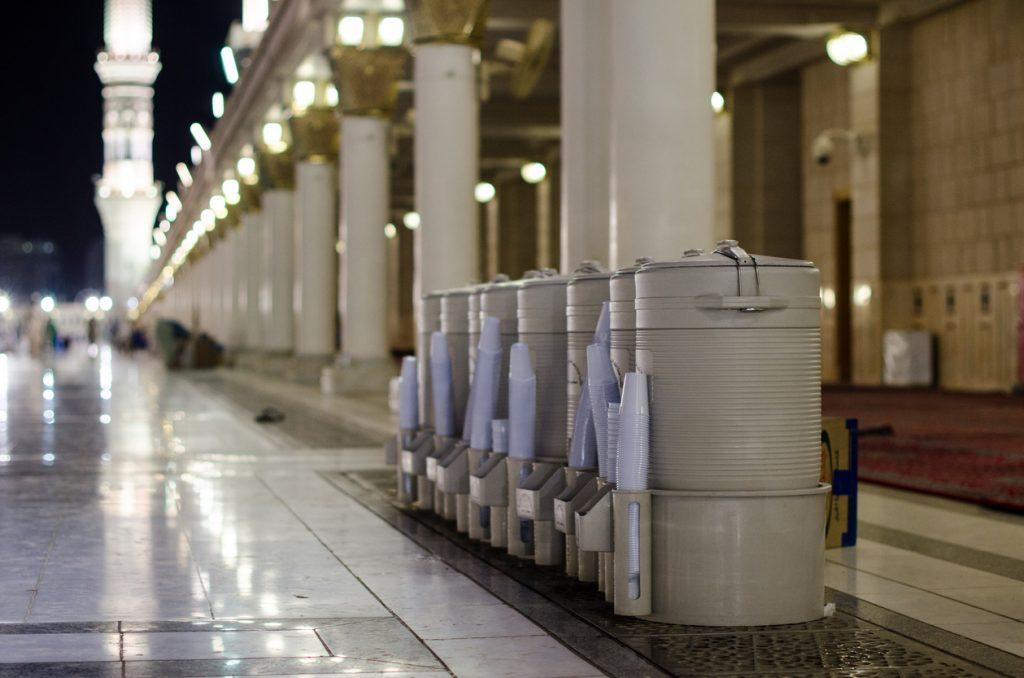
The climate in Saudi Arabia is often much hotter than many pilgrims are accustomed to.
Drink water regularly, even if you do not feel thirsty.
Take advantage of the readily available Zamzam water and avoid waiting until you become dehydrated.
📖 Reflection
Looking after your health enables you to worship Allah with greater strength and concentration.
Coping with the Heat
High temperatures can lead to exhaustion if sensible precautions are not taken.
To stay comfortable:
- Walk at a steady pace.
- Wear comfortable footwear.
- Use an umbrella when appropriate.
- Rest whenever necessary.
- Avoid unnecessary walking during the hottest part of the day.
🌟 Practical Tip
Many experienced pilgrims perform additional Tawaf during the cooler hours of the early morning or late evening.
Managing Crowds
Millions of Muslims visit Makkah and Madinah every year.
Crowds are especially heavy during Ramadan, Hajj and prayer times.
Always remain calm.
Avoid pushing or rushing.
If an area becomes crowded, wait patiently or return at a quieter time.
🕌 Remember
No voluntary act of worship is worth harming another Muslim.
Good manners are among the greatest acts of worship.
Using Zamzam Wisely
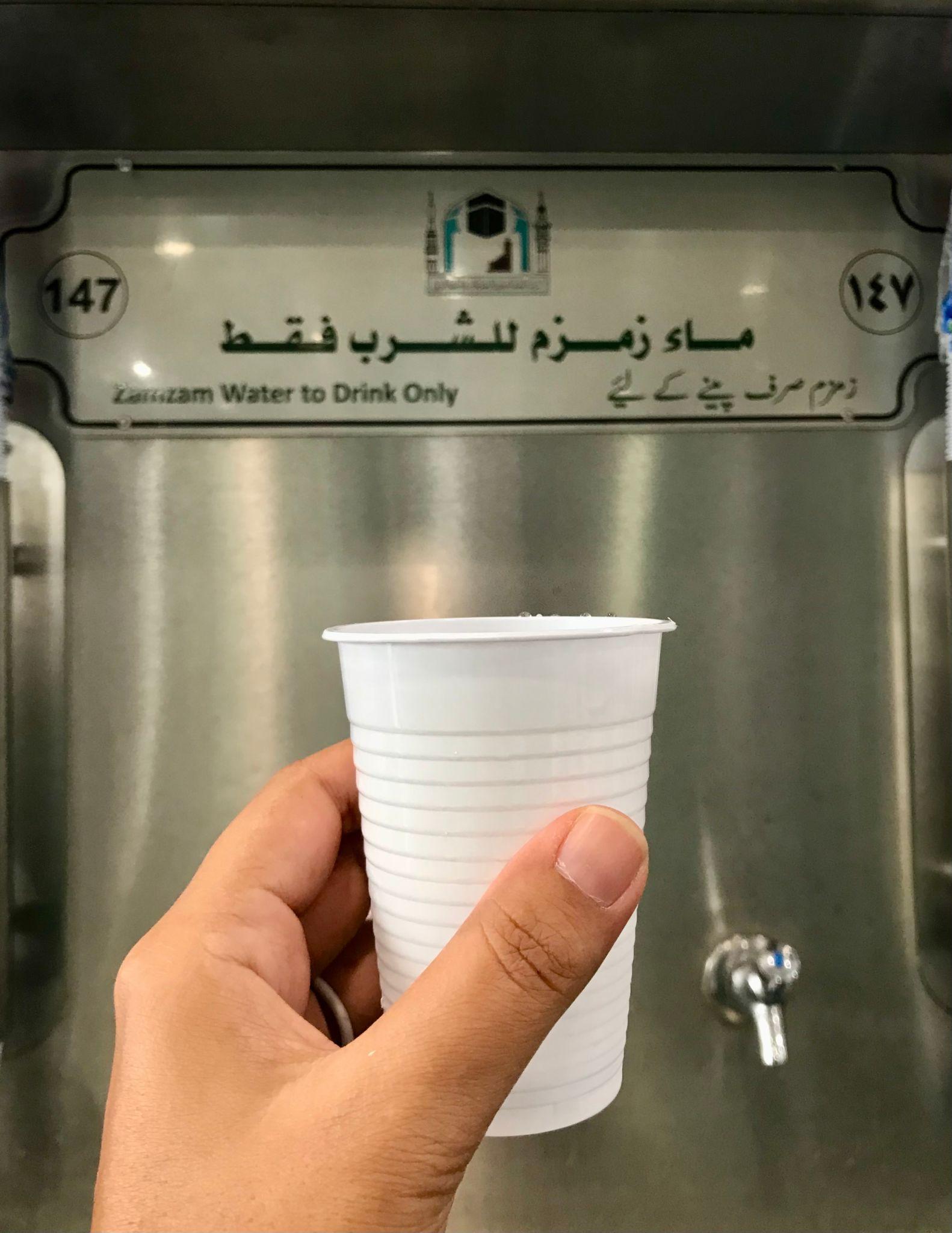
Zamzam is one of Allah’s greatest blessings.
Drink it with gratitude and make sincere du’a.
Avoid wasting water or taking more than you need.
Hadith
“The water of Zamzam is for whatever it is drunk for.”
📖 Reflection
Every sip of Zamzam reminds us of Allah’s mercy towards Sayyidah Hajar عليها السلام and her son Ismail عليه السلام.
Shopping and Souvenirs
Buying gifts for family and friends is a beautiful tradition, provided it does not distract from worship.
Popular gifts include:
- Dates
- Prayer mats
- Miswak
- Islamic books
- Tasbih
- Zamzam water (where permitted)
- Perfume (after leaving Ihram)
🌟 Practical Tip
Complete your acts of worship first. Shopping can always be done later.
Staying Safe
Always remain aware of your surroundings.
Keep valuables secure and avoid carrying unnecessary amounts of cash.
If travelling with family:
- Agree on meeting points.
- Keep children within sight.
- Carry emergency contact details.
🌟 Practical Tip
Carry a card showing:
- Hotel name
- Hotel address
- Group leader’s contact number
- Emergency contact details
This can be invaluable if you become separated from your group.
Travelling with Children
Umrah is a wonderful opportunity to introduce children to the sacred places of Islam.
Prepare them by explaining what they will see and encouraging patience and good manners.
Carry:
- Water
- Healthy snacks
- Sun protection
- Small activities for waiting periods
Allow regular rest breaks and do not expect children to keep the same pace as adults.
📖 Reflection
Helping children develop a love for Makkah and Madinah is one of the greatest gifts parents can give.
Travelling with Elderly Parents
Many pilgrims travel with elderly parents or relatives.
Plan additional rest periods and avoid unnecessary walking.
Wheelchair assistance is available in many parts of the Haram.
Show patience and kindness, remembering the great reward of serving one’s parents.
Qur’anic Reminder
وَقُل رَّبِّ ارْحَمْهُمَا كَمَا رَبَّيَانِي صَغِيرًا
“My Lord, have mercy upon them as they raised me when I was small.”
Common Mistakes During Umrah
Many first-time pilgrims unintentionally make mistakes that can easily be avoided.
Some common examples include:
- Rushing through Tawaf or Sa’i.
- Pushing to reach Hajar al-Aswad.
- Spending excessive time taking photographs.
- Neglecting obligatory prayers while shopping.
- Becoming impatient with fellow pilgrims.
- Forgetting that good manners are part of worship.
🕌 Remember
The objective of Umrah is not simply to complete the rituals, but to earn Allah’s pleasure through sincerity, patience and humility.
Making the Most of Your Time
Do not allow your visit to become dominated by shopping or social media.
Instead, increase:
- Salah
- Qur’an recitation
- Dhikr
- Du’a
- Reflection
- Acts of kindness
The moments spent in the Haram are among the most valuable moments of your life.
🌟 Practical Tip
Carry a small list of personal du’as so you do not forget important prayers during your visit.
Good Character During Travel
One of the greatest signs of an accepted Umrah is an improvement in character.
- Smile often.
- Help fellow pilgrims.
- Forgive mistakes.
- Be patient with delays.
- Speak gently.
- Offer assistance whenever possible.
Hadith
“The best of people are those with the best character.”
📖 Reflection
People may forget what we say, but they rarely forget how we made them feel. Let your manners reflect the beauty of Islam.
Chapter Reflection
Preparation is part of worship.
Patience is part of worship.
Kindness is part of worship.
Every challenge faced during Umrah is an opportunity to earn reward through sincerity and good character.
A successful Umrah is not measured only by completing the rituals, but by returning home with a heart that is closer to Allah and a life that reflects the teachings of His Messenger ﷺ.
Arabic
رَبَّنَا تَقَبَّلْ مِنَّا ۖ إِنَّكَ أَنتَ السَّمِيعُ الْعَلِيمُ
Translation
“Our Lord, accept from us. Indeed, You are the All-Hearing, the All-Knowing.”
(Surah Al-Baqarah 2:127)
May Allah accept the Umrah of every pilgrim, keep every traveller safe and allow us all to return to His Sacred House again and again.
Ameen.
Essential Duas for Your Journey
🏠 Leaving Home
When to read: Before leaving your home.
Arabic
بِسْمِ اللَّهِ، تَوَكَّلْتُ عَلَى اللَّهِ، لَا حَوْلَ وَلَا قُوَّةَ إِلَّا بِاللَّهِ
Translation
“In the Name of Allah, I place my trust in Allah. There is no power and no strength except with Allah.”
✈️ Beginning Your Journey
When to read: When boarding your car, coach, train or aircraft.
Arabic
سُبْحَانَ الَّذِي سَخَّرَ لَنَا هَذَا وَمَا كُنَّا لَهُ مُقْرِنِينَ وَإِنَّا إِلَىٰ رَبِّنَا لَمُنقَلِبُونَ
Translation
“Glory be to Him Who has subjected this to us, though we could never have accomplished it ourselves. Surely to our Lord we shall return.”
(Surah Az-Zukhruf 43:13–14)
🛫 Du’a for Travelling
When to read: After beginning your journey.
Arabic
اللَّهُمَّ إِنَّا نَسْأَلُكَ فِي سَفَرِنَا هَذَا الْبِرَّ وَالتَّقْوَى، وَمِنَ الْعَمَلِ مَا تَرْضَى، اللَّهُمَّ هَوِّنْ عَلَيْنَا سَفَرَنَا هَذَا، وَاطْوِ عَنَّا بُعْدَهُ، اللَّهُمَّ أَنْتَ الصَّاحِبُ فِي السَّفَرِ، وَالْخَلِيفَةُ فِي الْأَهْلِ، اللَّهُمَّ إِنِّي أَعُوذُ بِكَ مِنْ وَعْثَاءِ السَّفَرِ، وَكَآبَةِ الْمَنْظَرِ، وَسُوءِ الْمُنْقَلَبِ فِي الْمَالِ وَالْأَهْلِ
Translation
“O Allah, we ask You on this journey for righteousness, piety and deeds that please You. O Allah, make this journey easy for us and shorten its distance. O Allah, You are our Companion during the journey and Guardian over our family. O Allah, I seek refuge in You from the hardships of travel, from unpleasant sights and from an ill-fated return concerning wealth and family.”
❤️ Sending Salawat upon Rasulullah ﷺ
When to read: Frequently throughout your stay in Madinah.
Arabic
اللَّهُمَّ صَلِّ عَلَىٰ مُحَمَّدٍ وَعَلَىٰ آلِ مُحَمَّدٍ
Translation
“O Allah, send blessings upon Muhammad and the family of Muhammad.”
🕌 Greeting Rasulullah ﷺ
When to read: When standing before the Blessed Chamber.
Arabic
السَّلَامُ عَلَيْكَ يَا رَسُولَ اللَّهِ وَرَحْمَةُ اللَّهِ وَبَرَكَاتُهُ
Translation
“Peace be upon you, O Messenger of Allah, and the mercy of Allah and His blessings.”
🕌 Greeting Sayyiduna Abu Bakr رضي الله عنه
When to read: After conveying Salam to Rasulullah ﷺ.
Arabic
السَّلَامُ عَلَيْكَ يَا أَبَا بَكْرٍ رَضِيَ اللَّهُ عَنْكَ
Translation
“Peace be upon you, O Abu Bakr. May Allah be pleased with you.”
🕌 Greeting Sayyiduna Umar رضي الله عنه
When to read: After conveying Salam to Sayyiduna Abu Bakr رضي الله عنه.
Arabic
السَّلَامُ عَلَيْكَ يَا عُمَرُ رَضِيَ اللَّهُ عَنْكَ
Translation
“Peace be upon you, O Umar. May Allah be pleased with you.”
🚪 Entering Masjid Nabawi (or Any Mosque)
When to read: Upon entering the mosque.
Arabic
بِسْمِ اللَّهِ، وَالصَّلَاةُ وَالسَّلَامُ عَلَىٰ رَسُولِ اللَّهِ، اللَّهُمَّ افْتَحْ لِي أَبْوَابَ رَحْمَتِكَ
Translation
“In the Name of Allah. Peace and blessings be upon the Messenger of Allah. O Allah, open for me the doors of Your mercy.”
🤲 Du’a Inside Masjid Nabawi
When to read: While praying or sitting in the mosque.
Authentic Guidance
There is no authentic prescribed du’a from the Qur’an or Sunnah specifically for sitting inside Masjid Nabawi.
Make sincere personal du’a in any language, ask Allah for forgiveness, guidance, steadfastness and acceptance of your worship.
🚪 Leaving the Mosque
When to read: Upon leaving any mosque.
Arabic
بِسْمِ اللَّهِ، وَالصَّلَاةُ وَالسَّلَامُ عَلَىٰ رَسُولِ اللَّهِ، اللَّهُمَّ إِنِّي أَسْأَلُكَ مِنْ فَضْلِكَ
Translation
“In the Name of Allah. Peace and blessings be upon the Messenger of Allah. O Allah, I ask You for Your bounty.”
🪦 Visiting Jannatul Baqi
When to read: Upon entering the cemetery.
Arabic
السَّلَامُ عَلَيْكُمْ دَارَ قَوْمٍ مُؤْمِنِينَ، وَإِنَّا إِنْ شَاءَ اللَّهُ بِكُمْ لَلَاحِقُونَ، نَسْأَلُ اللَّهَ لَنَا وَلَكُمُ الْعَافِيَةَ
Translation
“Peace be upon you, O dwelling of believing people. Indeed, if Allah wills, we shall join you. We ask Allah to grant well-being to us and to you.”
🌅 Morning Adhkar
When to read: Every morning after Fajr.
Arabic
اللَّهُمَّ بِكَ أَصْبَحْنَا، وَبِكَ أَمْسَيْنَا، وَبِكَ نَحْيَا، وَبِكَ نَمُوتُ، وَإِلَيْكَ النُّشُورُ
Translation
“O Allah, by You we enter the morning, by You we enter the evening, by You we live, by You we die and to You is the resurrection.”
🌙 Evening Adhkar
When to read: Every evening after Asr or Maghrib.
Arabic
اللَّهُمَّ بِكَ أَمْسَيْنَا، وَبِكَ أَصْبَحْنَا، وَبِكَ نَحْيَا، وَبِكَ نَمُوتُ، وَإِلَيْكَ الْمَصِيرُ
Translation
“O Allah, by You we enter the evening, by You we enter the morning, by You we live, by You we die and to You is the final return.”
🚌 Leaving Madinah
When to read: Before departing Madinah for Makkah.
Authentic Guidance
There is no authentic prescribed du’a from the Qur’an or Sunnah specifically for leaving Madinah.
It is recommended to:
Send abundant Salawat upon Rasulullah ﷺ.
Ask Allah to accept your visit.
Ask Allah to grant you the opportunity to return.
Make sincere personal du’a in any language.
Essential Du’as for Your Journey
(Continued)
🕌 Entering Ihram
When to read: After wearing Ihram and making the intention at the Miqat.
Authentic Guidance
There is no authentic prescribed du’a from the Qur’an or Sunnah specifically for making the intention (niyyah) for Umrah.
Make the intention in your heart, then begin reciting the Talbiyah.
🕋 The Talbiyah
When to read: From entering Ihram until the beginning of Tawaf.
Arabic
لَبَّيْكَ اللَّهُمَّ لَبَّيْكَ، لَبَّيْكَ لَا شَرِيكَ لَكَ لَبَّيْكَ، إِنَّ الْحَمْدَ وَالنِّعْمَةَ لَكَ وَالْمُلْكَ، لَا شَرِيكَ لَكَ
Translation
“Here I am, O Allah, here I am. Here I am, You have no partner, here I am. Surely all praise, every blessing and all sovereignty belong to You. You have no partner.”
🕌 Entering Masjid al-Haram
When to read: Upon entering Masjid al-Haram.
Arabic
بِسْمِ اللَّهِ، وَالصَّلَاةُ وَالسَّلَامُ عَلَىٰ رَسُولِ اللَّهِ، اللَّهُمَّ افْتَحْ لِي أَبْوَابَ رَحْمَتِكَ
Translation
“In the Name of Allah. Peace and blessings be upon the Messenger of Allah. O Allah, open for me the doors of Your mercy.”
👀 First Sight of the Ka’bah
When to read: Upon seeing the Ka’bah for the first time.
Authentic Guidance
There is no authentic prescribed du’a from the Qur’an or Sunnah specifically for the first sight of the Ka’bah.
Raise your hands if you wish and make sincere personal du’a in any language. Ask Allah for acceptance of your Umrah, forgiveness, guidance and goodness in this life and the Hereafter.
🕋 Beginning Tawaf
When to read: At Hajar al-Aswad at the beginning of each circuit.
Arabic
بِسْمِ اللَّهِ، اللَّهُ أَكْبَرُ
Translation
“In the Name of Allah. Allah is the Greatest.”
🤲 During Tawaf
When to read: Throughout Tawaf.
Authentic Guidance
There is no authentic prescribed du’a from the Qur’an or Sunnah for each of the seven circuits of Tawaf.
Recite the Qur’an, make dhikr, send Salawat upon Rasulullah ﷺ and make sincere personal du’a in any language.
🇾🇪 Between the Yemeni Corner and Hajar al-Aswad
When to read: Between Ar-Rukn al-Yamani and Hajar al-Aswad during each circuit.
Arabic
رَبَّنَا آتِنَا فِي الدُّنْيَا حَسَنَةً وَفِي الْآخِرَةِ حَسَنَةً وَقِنَا عَذَابَ النَّارِ
Translation
“Our Lord, grant us good in this world, good in the Hereafter and protect us from the punishment of the Fire.”
(Surah Al-Baqarah 2:201)
🕌 At Maqam Ibrahim
When to read: After completing Tawaf.
Arabic
وَاتَّخِذُوا مِن مَّقَامِ إِبْرَاهِيمَ مُصَلًّى
Translation
“And take the Station of Ibrahim as a place of prayer.”
(Surah Al-Baqarah 2:125)
Then pray two rak’ahs if it is possible to do so without causing difficulty to others.
💧 Drinking Zamzam
When to read: Before or while drinking Zamzam.
Arabic
اللَّهُمَّ إِنِّي أَسْأَلُكَ عِلْمًا نَافِعًا، وَرِزْقًا وَاسِعًا، وَشِفَاءً مِنْ كُلِّ دَاءٍ
Translation
“O Allah, I ask You for beneficial knowledge, abundant provision and cure from every illness.”
🏃 Beginning Sa’i at Safa
When to read: Upon reaching Safa before beginning Sa’i.
Arabic
إِنَّ الصَّفَا وَالْمَرْوَةَ مِن شَعَائِرِ اللَّهِ
Translation
“Indeed, Safa and Marwah are among the symbols of Allah.”
(Surah Al-Baqarah 2:158)
Then say:
Arabic
أَبْدَأُ بِمَا بَدَأَ اللَّهُ بِهِ
Translation
“I begin with that which Allah began with.”
🏃 On Safa and Marwah
When to read: After ascending Safa and each time you reach Safa or Marwah.
Arabic
اللَّهُ أَكْبَرُ، اللَّهُ أَكْبَرُ، اللَّهُ أَكْبَرُ
لَا إِلَهَ إِلَّا اللَّهُ وَحْدَهُ لَا شَرِيكَ لَهُ، لَهُ الْمُلْكُ وَلَهُ الْحَمْدُ، وَهُوَ عَلَىٰ كُلِّ شَيْءٍ قَدِيرٌ، لَا إِلَهَ إِلَّا اللَّهُ وَحْدَهُ، أَنْجَزَ وَعْدَهُ، وَنَصَرَ عَبْدَهُ، وَهَزَمَ الْأَحْزَابَ وَحْدَهُ
Translation
“Allah is the Greatest, Allah is the Greatest, Allah is the Greatest.
There is no god except Allah alone without partner. His is the dominion and His is all praise, and He has power over everything. There is no god except Allah alone. He fulfilled His promise, granted victory to His servant and defeated the confederates alone.”
Then make sincere personal du’a.
Repeat this three times.
🤲 During Sa’i
When to read: While walking between Safa and Marwah.
Authentic Guidance
There is no authentic prescribed du’a from the Qur’an or Sunnah for each journey between Safa and Marwah.
Remember Allah, recite the Qur’an and make personal du’a in any language.
✂️ Completing Umrah
When to read: After shaving or trimming the hair.
Authentic Guidance
There is no authentic prescribed du’a from the Qur’an or Sunnah specifically after completing Umrah.
Praise Allah, thank Him for enabling you to complete your Umrah and ask Him to accept it.
🏠 Returning Home
When to read: Upon returning from your journey.
Arabic
آيِبُونَ، تَائِبُونَ، عَابِدُونَ، لِرَبِّنَا حَامِدُونَ
Translation
“We return repentant, worshipping our Lord and praising Him.”
🤲 Final Du’a
Arabic
رَبَّنَا تَقَبَّلْ مِنَّا ۖ إِنَّكَ أَنتَ السَّمِيعُ الْعَلِيمُ وَتُبْ عَلَيْنَا ۖ إِنَّكَ أَنتَ التَّوَّابُ الرَّحِيمُ
Translation
“Our Lord, accept from us. Indeed, You are the All-Hearing, the All-Knowing. Accept our repentance. Surely You are the Most Accepting of Repentance, the Most Merciful.”
A Blessed Farewell
May Allah accept your Umrah, forgive your sins, bless your family, increase you in faith, and invite you back to His Sacred House and the blessed city of His Messenger ﷺ again and again.
اللَّهُمَّ آمِين
O Allah, Ameen.